

How To Breathe While Running: Pro Tips For Easy Miles
Breathe rhythmically with your diaphragm, through nose and mouth, matched to your pace.
If you want to learn how to breathe while running, you are in the right place. I coach runners from first 5Ks to marathons, and I have learned what actually works on the road. This guide explains how to breathe while running in simple steps, backed by science and real practice. Read on for clear methods you can try today.
Why breathing matters for runners
Your breath is your engine’s air intake. When it is smooth and strong, everything feels easier. When it is choppy, you slow down, tense up, and tire fast.
Here is what good breathing does for you:
- Brings in more oxygen for your working muscles.
- Clears carbon dioxide so your body stays in balance.
- Steadies your heart rate and your rhythm.
- Lowers stress so you can focus.
Research shows that trained breathing can improve running economy and delay fatigue. Many runners ask how to breathe while running because it seems simple, yet it shapes pace, form, and endurance.

How to breathe while running: nose, mouth, or both?
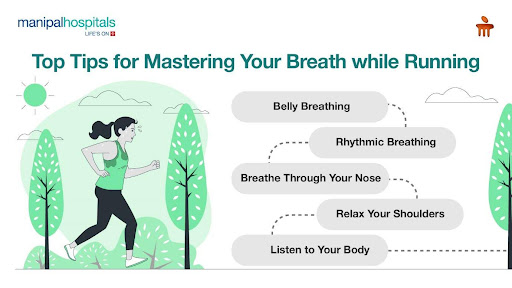
At easy paces, nose breathing helps calm your nervous system. It also warms and filters the air. But as speed rises, your need for air goes up fast.
Use this simple rule:
- Easy runs: try nose-first, with gentle mouth support.
- Moderate to hard runs: use both nose and mouth to meet demand.
- Sprints or hills: mouth plays a bigger role so you do not starve for air.
Studies find that mouth or mixed breathing moves more air at higher intensities. The key in how to breathe while running is not to force one method. Match the method to the effort.

Rhythmic patterns that work
Rhythmic breathing links your steps to your inhale and exhale. It keeps you relaxed and steady.
Try these common patterns:
- 3:3 for easy runs: inhale for three steps, exhale for three steps.
- 3:2 or 2:2 for moderate efforts: a bit faster air turnover.
- 2:1 for surges and hills: sharp and strong when you need it.
Coach tip from the field: start with a 3:3 on your warm-up. As pace lifts, let it shift on its own to 3:2, then 2:2. This is a simple way to practice how to breathe while running without overthinking it.

Train your diaphragm
Diaphragmatic breathing, or belly breathing, draws air deep into the lungs. It reduces shallow chest breathing and helps you stay calm.
Try this drill off the run:
- Lie on your back. Bend your knees. Place one hand on your belly and one on your chest.
- Inhale through your nose for four counts. Let your belly rise first. Keep the chest quiet.
- Exhale through relaxed lips for four to six counts. Feel your ribs fall.
- Repeat for two to three minutes. Then practice it seated and standing.
Then take it to the run:
- Start your run with three slow belly breaths at a stop.
- Keep your jaw loose. Tongue rests on the roof of your mouth.
- Check once per mile that your belly still leads the inhale.
I used this to fix my late-race gasping before my second marathon. It felt odd at first, but after two weeks it felt natural and smooth.
Posture and relaxation for easy airflow
Air loves space. Give your ribs room to move.
Use these quick cues:
- Tall through the crown of your head. Imagine a string lifting you up.
- Shoulders down and back. No shrugging.
- Elbows near 90 degrees. Swing from the shoulders, not from tense fists.
- Relax your jaw and face. A soft smile helps.
If you want to master how to breathe while running, posture is step one. Good form opens your chest and lets the diaphragm work well.

Warm-ups and drills that teach how to breathe while running
Warm-ups prime your lungs and nerves. A good start sets the tone for the run.
Use this five-minute flow:
- Two minutes of brisk walking or very easy jog with nose-first breathing.
- Three rounds of 20-second pickups at 5K effort. Recover for 40 seconds easy. Use 3:2 breathing on the pickups.
- Three deep belly breaths before you start the main run.
Bonus drills:
- Humming exhale: hum as you exhale for 10 to 20 seconds. It lengthens your out-breath and calms you.
- Box breathing after hard reps: inhale 4, hold 4, exhale 4, hold 4 for two rounds to reset.
This routine is a fast way to practice how to breathe while running and to settle nerves before workouts.

Fix common breathing problems on the run
Side stitch
- Slow down a notch. Switch to a 3:2 pattern.
- Exhale as the opposite foot strikes the ground from the painful side.
- Press your fingers under the ribs and blow out through pursed lips.
Cold or dry air
- Use a neck gaiter or buff to warm the air.
- Breathe more through the nose at easy paces.
- Extend your exhale to prevent a cough reflex.
Asthma or allergies
- Warm up longer. Use an inhaler only as prescribed.
- Prefer nose-plus-mouth at easy paces to reduce triggers.
- If chest tightness rises fast, stop and follow your care plan.
Anxiety or panic creep
- Focus on long exhales. Try 4-in, 6-out for one minute.
- Drop your shoulders. Unclench your hands.
- Tell yourself: slow is smooth, smooth is fast.
Cramps late in races
- Check posture and cadence. Small changes can free your ribs.
- Sip fluids; avoid large gulps.
- Ease pace for one minute while you reset your breathing rhythm.
These fixes have helped many of my athletes. They are core to how to breathe while running when things get tough.

How to breathe while running at different paces and terrains
Easy days
- Aim for 3:3 or even 4:4 breathing.
- Talk test: you can speak in phrases.
Tempo runs
- Use 3:2. Keep it steady.
- Mouth helps more here. Stay relaxed.
Intervals
- Use 2:2 or 2:1 during reps.
- Between reps, try 4-in, 6-out walking or very easy jog.
Hills
- Shorten your stride. Lift knees a bit.
- Switch to 2:2 or 2:1 near the top.
Trails
- Terrain changes demand flexible rhythm.
- Keep your exhale long as you step over rocks and roots.
These patterns show how to breathe while running in real situations so you can adapt on the fly.
Tools and tech to support your breath
Simple tools can help you feel your breath and track progress.
Try these options:
- Metronome app: set step rate and match breaths to steps.
- Nasal strips: open nasal passages on easy or moderate runs.
- Heart rate and RPE: watch how calm breathing lowers effort at the same pace.
- CO2 tolerance test: time a gentle breath hold after an exhale at rest. Train longer exhales to improve it over weeks.
Use tools as guides, not rules. They should support how to breathe while running, not add stress.
Recovery breathing that boosts fitness
How you breathe after hard work speeds your recovery.
Use this quick reset:
- Stand tall or lie on your back with feet up.
- Inhale through your nose for three to four counts.
- Exhale through pursed lips for six to eight counts.
- Repeat for one to three minutes until your heart rate drops.
This helps clear carbon dioxide, reduces stress, and sets you up for the next interval or for the rest of your day.
A simple weekly plan to master how to breathe while running
Use this as a template. Keep sentences in your head simple too. Breathe, step, repeat.
Monday
- Easy run 30 to 45 minutes with 3:3 rhythm.
Tuesday
- Intervals: 6 by 2 minutes at 5K effort with 2:2. Recover 2 minutes with 4-in, 6-out.
Wednesday
- Rest or walk. Ten minutes of belly breathing practice.
Thursday
- Tempo: 20 minutes at steady effort with 3:2. Focus on posture.
Friday
- Easy run 30 minutes. Try nose-first breathing for the first half.
Saturday
- Long run. Start 3:3. Finish last 10 minutes at 3:2.
Sunday
- Mobility and rib work. Three sets of humming exhales and side stretches.
Repeat for four weeks. This plan keeps how to breathe while running front and center without heavy time cost.
Frequently Asked Questions of how to breathe while running
Should I breathe through my nose or mouth when running?
Use both as effort rises. Nose-first is fine for easy runs, but mouth support helps at moderate to hard paces.
What is the best breathing pattern for beginners?
Start with 3:3 at easy pace. As you speed up, shift to 3:2 or 2:2 without forcing it.
How do I stop side stitches while running?
Slow slightly and lengthen your exhale. Press under the ribs on the sore side and exhale as the opposite foot lands.
How can I improve my lung capacity for running?
Train your diaphragm with daily belly breathing drills. Add steady aerobic runs and strides to raise your air demand over time.
Is it okay to breathe only through my mouth when running fast?
Yes, during hard efforts your body needs more air. Mouth breathing helps you meet that demand without gasping.
How to breathe while running in cold weather?
Cover your mouth and nose with a buff to warm and humidify air. Use nose-first breathing at easy paces and ease into efforts.
Does cadence affect breathing?
Yes, a steady cadence supports a steady breath rhythm. Many runners find it easier to match breaths to steps at a set cadence.
Conclusion
Breathing is a skill you can train, just like form or pace. Use your diaphragm, match your breathing pattern to your effort, keep your posture tall, and relax your face and shoulders. Practice small drills each week and you will master how to breathe while running in any workout.
Take one tip from this guide and try it on your next run. Then add another next week. If this helped, subscribe for more practical run guides, or share your own breath tips in the comments.


