

7 Best Shoes for Throwing Discus That Support Strong, Steady Throws
A solid discus throw starts with a controlled turn and a firm push from the circle. Regular running shoes cushion forward strides, but their grippy soles can resist rotation, making it harder to turn smoothly and keep your footing consistent.
That’s where discus shoes can help. Their flatter soles let you pivot across the throwing circle, while a secure fit supports your feet through each turn and push. You can focus on rhythm and technique instead of fighting your footwear.
Many models offer smooth, durable outsoles for controlled movement, supportive uppers that help keep your feet in place, and a snug fit for confident throws. Some also work for shot put, giving you practical use across throwing events.
Discus shoes differ in fit, sole feel, and support, so your choice depends on your technique and comfort needs. Explore the best shoes for throwing discus below to find a pair that suits your time in the circle.
7 Best Shoes for Throwing Discus Reviews

1.VELAASA Stones Discus and Shot Put Shoe
Fast rotational surface helps you spin smoothly in throwing events

2.ASICS Hyper Throw 3 Track and Field Shoes
Circular pivot points help you turn smoothly during throwing moves

3.Nike Zoom Rotational 6 Throwing Shoes
Men-to-women sizing helps you choose the right fit across size ranges

4.VELAASA Revolution Throwing Shoe
Moderate-friction outsole rubber helps control rotation during throws

5.Nike Zoom Rival SD 2 Throwing Shoes
Integrated arch strap wraps the foot for a secure fit during throws
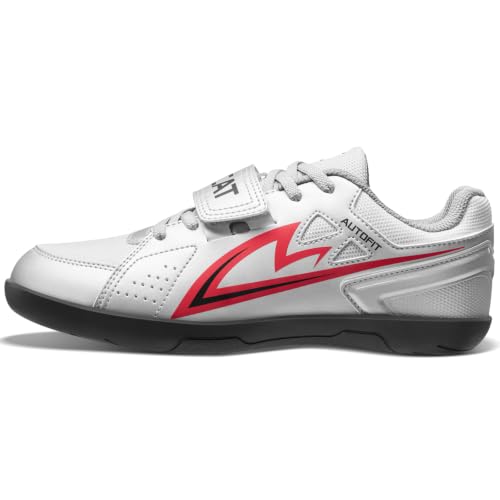
6.Sonic Cat YSM-TH2-MEN Discus Throwing Shoes
Carbon plate supports a stable feel and connected drive-off in throws

7.adidas adiZero Throws Track and Field Shoes
Unisex adult design offers adiZero throwing shoes for track and field
1. VELAASA Stones Discus and Shot Put Shoe
VELAASA Stones is a throwing shoe for discus athletes who need a flexible fit for rotational movement. Its design also suits shot put and hammer throw, so athletes who practice more than one event can use the same pair.
The outsole combines curvature, stiffness and rubber technology to create a surface designed for smooth spinning. That rotational focus matters in discus, where foot movement helps you turn through the throw and reach the right positions.
A durable mesh upper gives the foot room to move, while the flexible outsole supports ground contact during the throw. Together, these features are intended to help athletes apply force while maintaining the foot positions their technique requires.
This pair comes in Blue Camo and is listed as a women’s size 14.5 and a men’s size 13. The title also says 13.0 men’s and 14.5 women’s, so check the size details carefully before ordering to make sure the listing matches the fit you need.
Although the shoe’s design centers on throwing, the title also includes running and track and field training. Its stated uses focus most clearly on discus, shot put and hammer, making it worth considering for athletes who train in those events.
The VELAASA Stones suits discus throwers who want a shoe built around rotational movement, especially those who also practice shot put or hammer. Its listed size and event focus make fit and training needs the main points to weigh.
- Curved rubber outsole supports smooth rotation
- Flexible sole helps maintain ground contact
- Mesh upper allows foot mobility for throws
- Designed for discus, shot put and hammer
- No major cons
2. ASICS Hyper Throw 3 Track and Field Shoes
For throwing discus, the ASICS Hyper Throw 3 offers circular pivot points that help you turn through the throwing motion. An adjustable midfoot belt lets you set the fit around the middle of your foot.
Breathable mesh underlays give the shoe ventilation, while synthetic leather overlays add structure to its upper. Together, these materials balance airflow with support during practice and competition.
The circular pivot points suit the rotation used in discus, while the belt helps keep the shoe snug as you move. The product details do not specify a sole material or other traction features, so buyers seeking those details may want to check before choosing.
This Black/Gunmetal shoe is listed in size 8.5 and weighs about 1.2 pounds. That gives buyers a clear reference for its fit and weight, though the listing does not state whether that figure applies to one shoe or the pair.
Its features focus on a secure midfoot fit, breathable construction and turning movement. The ASICS Hyper Throw 3 suits throwers who want a specialized shoe for discus and value an adjustable fit with pivot points.
- Circular pivot points support discus turns
- Adjustable belt lets you tune midfoot fit
- Breathable mesh underlays allow airflow
- No major cons
3. Nike Zoom Rotational 6 Throwing Shoes
1.6 pounds puts the Nike Zoom Rotational 6 among the lighter details listed for a discus throwing shoe. Its title identifies it as a track and field throwing shoe, making it a specialized option for athletes shopping for shoes for discus.
The product data does not specify the shoe’s sole, closure, or support features, so buyers should check those details before choosing it. It does give the color as Anthracite/Electric Algae/Vapor Green, a combination that makes the shoe easy to distinguish from plain black or white options.
Sizing needs attention because the listing uses men-to-women sizing. It states that a men’s 10.5 corresponds to a women’s 15, while this particular listing is size 6. Buyers should confirm which sizing scale applies before ordering.
The listed weight is about 1.6 pounds. That number gives buyers a point of comparison when considering footwear for throwing practice or competition, though the data does not say whether it refers to one shoe or the pair.
Nike names the shoe the Zoom Rotational 6 and identifies it for track and field throwing. The listing provides no further performance specifications, so it suits shoppers who want a throwing-specific Nike shoe and can verify the fit and construction details they need.
- Throwing-specific design suits discus athletes
- Weighs about 1.6 pounds, per listing
- Men-to-women sizing guidance helps compare sizes
- No major cons
4. VELAASA Revolution Throwing Shoe
Discus throwers who want one shoe for several rotational events get a flexible option in the VELAASA Revolution. Its Tungsten Line outsole uses a rubber compound designed for moderate friction, which supports controlled foot movement during turns.
For discus, shot put and hammer throw, the outsole’s friction level helps balance grip with rotation. The shoe also appears in the title as suitable for javelin and running, giving athletes more than one track-and-field use.
A durable mesh upper and flexible outsole give the foot room to move and stay in contact with the ground. That combination supports positioning during a throw, where athletes need to move through the rotation and apply force from the ground.
Sizing needs attention before ordering: the maker says the shoes run smaller than usual and recommends choosing one size above your normal size. This listing is black and specifies a size 14 for men, equivalent to a 15.5 women’s size.
The Revolution line also comes in red, white and blue, plus Snow Camo, though this listing is black. It suits discus throwers who also train for shot put or hammer and want a rotation-focused shoe; check the size guidance before buying.
- Moderate-friction outsole supports rotational throws
- Flexible sole helps keep ground contact
- Mesh upper allows foot mobility during throws
- Designed for discus, shot put and hammer
- Runs small; sizing up may be needed
5. Nike Zoom Rival SD 2 Throwing Shoes
The throwing circle is where the Nike Zoom Rival SD 2 is meant to work, with a flexible outsole that helps grip wet surfaces. Its forefoot Pebax plate adds durability underfoot, while the shoe’s throwing-focused design suits discus practice and competition.
A synthetic leather upper supports the foot without sewn seams. An integrated strap wraps across the arch to help hold the foot in place during turns and planting, giving the shoe a more secure fit for throwing movements.
The rubber toe tip adds protection where the shoe meets the ground during planting and forward motion. Durable midsole foam cushions each step while keeping the shoe lightweight, which can help during repeated drills and time spent in the circle.
At size 9, this pair weighs about 1.8 pounds. The listed color combines Black, Electric Algae, Bright Spruce and Volt, so buyers can check that the look suits their kit before ordering.
Nike designed the Zoom Rival SD 2 for throwing events, and its traction, arch strap and forefoot plate are relevant to discus work. It suits throwers who want a supportive shoe with a textured outsole for wet conditions and durable parts underfoot.
- Textured outsole helps grip wet surfaces
- Arch strap helps hold the foot securely
- Pebax plate adds durable underfoot support
- Rubber toe tip handles planting movements
- No major cons
6. Sonic Cat YSM-TH2-MEN Discus Throwing Shoes
The carbon plate kinetic support system gives these Sonic Cat throwing shoes a stable underfoot feel during setup and a connected feel as you drive off. They focus on discus, shot put and hammer throw, rather than running or general gym workouts.
During discus practice, the rotational rubber outsole supports smoother turns inside the circle. Its traction pattern also helps control footwork as you rotate, brake and move laterally, including through repeated throwing drills.
A lace-up closure, forefoot strap and supportive upper hold the midfoot and forefoot in place. That fit helps limit unwanted shifting as you pivot, plant and drive through a throw.
These silver shoes suit men, women, youth throwers, and high school and college athletes. Their intended uses include daily practice, school meets, competition preparation and focused training for throwing events.
The listed adult men’s size is 10, while the specifications give size 10.5, so check the seller’s sizing details before ordering. Each shoe weighs about 0.9 pounds, a useful figure to consider when choosing footwear for practice and meets.
For buyers focused on discus, the turning support and forefoot hold are central features; shot put and hammer throw training are also within their stated scope. They suit throwers who want event-specific shoes for circle work, not all-purpose athletic footwear.
- Carbon plate supports setup and drive-off
- Rotational outsole helps turns in the circle
- Strap and laces help secure the forefoot
- Supports discus, shot put and hammer drills
- Not designed for running or general gym use
7. adidas adiZero Throws Track and Field Shoes
adidas offers the Adizero Throws as a unisex shoe for throwing events, including discus. Its White/Black/Silver Metallic colorway gives buyers a distinct option for practice or competition.
The product title lists a women’s size 9.5 and a men’s size 8.5, both in medium width. That paired sizing helps shoppers compare the listed fit with the size they usually wear.
At about 1.5 pounds, the pair has a stated weight buyers can consider when choosing throwing shoes. The listing identifies it as an adult model, so it is intended for grown athletes rather than children.
The product information does not specify the outsole, upper material, closure, or details about traction. Buyers who need those details for their throwing surface or fit preferences may want to check them before ordering.
It also gives no technical information about support or its design for discus versus other throws. The listing names the adiZero Throws line, but does not explain what its construction does during a throw.
As the final option, it suits adult throwers who want a unisex adidas shoe in the listed medium sizes and colorway. It is best for shoppers who can confirm that the available sizing and unspecified shoe details meet their needs.
- Unisex adult shoe for throwing events
- Listed in both women’s 9.5 and men’s 8.5
- White, black and silver colorway offers choice
- No details on traction or outsole design
How to Choose the Best Shoes for Throwing Discus
The right discus shoes help you turn smoothly in the circle while keeping your feet stable, but the best fit depends on your throwing style, event rules, foot shape, and budget. Prioritize rotation and fit first, then weigh grip, support, and durability.
| If You Need | Look For | Expect |
|---|---|---|
| Smooth turns | Rounded pivot zones, flexible sole | Less straight-line grip |
| More planted footing | Textured rubber, moderate traction | Slower rotation on rough surfaces |
| Secure midfoot | Strap or firm lace-up fit | More adjustment before throwing |
| One shoe for multiple events | Versatile throwing design | Compromise between event preferences |
| Lightweight feel | Lower listed shoe weight | Less cushioning or structure |
| Wet-circle confidence | Rubber tread suited to damp surfaces | Grip still varies with surface |
| Lower-cost option | Basic throwing features, clear sizing | Fewer fit or material refinements |
Rotation And Sole Shape
Discus technique depends on turning inside a circle, so the outsole should let your foot pivot without feeling stuck. Look for a smooth, rounded sole or defined pivot areas that support rotation through the heel and forefoot.
A flexible sole helps your foot move through the turn, while a very grippy tread can resist rotation. Choose a balance that suits your technique and circle surface; beginners often benefit from predictable movement over an extremely slick feel.
Sole curvature and stiffness also affect how the shoe rolls during a turn. If possible, try a few controlled pivots on a safe surface before buying, and avoid using indoor floors as a guide to circle behavior.
Fit And Sizing
A secure fit helps keep your foot aligned as you turn and push, while excess space can let it slide inside the shoe. Look for a snug heel and midfoot, with enough room to spread your toes.
Throwing shoes may use men’s, women’s, or unisex sizing, and conversions are not always consistent. Measure both feet late in the day, compare the longer foot with the size chart, and confirm the chart’s sizing system.
Pay special attention to listings with different sizes in the title and specifications. Confirm the exact size, width, and conversion before ordering, and review the return policy if you cannot try the shoes on first.
Grip And Circle Surface
Tread should give you control during the drive without locking your foot in place during rotation. Textured rubber and moderate traction suit many throwers, but the right amount depends on your technique and the circle.
Concrete, painted surfaces, and worn circles can feel different underfoot, while dust or moisture changes traction further. If you train on several surfaces, a balanced outsole is usually more practical than a tread designed for one condition.
Wet-surface grip is useful during practice, but it does not remove the risk of slipping. Follow meet rules, inspect the circle, and avoid assuming that a tread pattern guarantees secure footing in every condition.
Midfoot Support
A strap, supportive upper, or secure lacing helps hold your foot during the turn. This can reduce unwanted movement inside the shoe, especially when your technique places strong pressure across the midfoot.
A strap adds an adjustment point, while laces allow more precise tightening across different parts of the foot. Choose the setup that holds your foot without pinching; a very tight closure can restrict comfort during longer sessions.
If you have a high instep or broad forefoot, look for adjustable closure and a shape that does not squeeze the upper. Try the shoes with your usual throwing socks, since sock thickness changes the fit.
Upper Materials And Breathability
Mesh uppers allow airflow and often feel lighter, which helps during repeated practice in warm weather. Synthetic overlays or reinforced sections add structure, but they may feel less flexible than an upper with fewer overlays.
For frequent training, look for durable material around high-wear areas and stitching that appears secure. A light, breathable upper suits hot conditions, while added reinforcement is useful if your shoes face regular abrasion or rough storage.
The upper should hold your foot without rubbing when you pivot. If you have sensitive skin, check the inside seams and heel padding, and introduce new shoes gradually before using them in competition.
Weight And Cushioning
A lighter shoe can feel less tiring across repeated throws, but weight alone does not predict control or comfort. Compare listed weights only when the measurement basis is clear, since sizes and listing methods can differ.
Some cushioning reduces impact during warm-ups and general training, while a firmer, lower-profile feel can make foot placement easier to sense. Choose comfort for longer sessions, but avoid excess softness if it makes your stance feel unstable.
Use your current shoes as a reference if you know what feels comfortable. A large change in weight or cushioning can alter how the shoe feels during turns, so allow practice time before an important meet.
Event Versatility
Many throwing shoes are made for discus, shot put, and hammer, but each event can favor a different balance of traction, flexibility, and support. Check that the intended events match your training and competition needs.
A versatile pair saves money and simplifies your kit if you throw several events. The trade-off is that a design suited to multiple events may not feel as specialized as a shoe chosen for your main event.
Some listings also mention running or javelin use, but those labels do not establish suitability for every workout or competition. Check your event’s footwear rules and ask your coach if you need one pair for both throwing and running.
Durability And Construction
Throwing shoes face repeated turning forces, friction, and pressure around the toe and outsole. Look for reinforced areas, securely attached sole materials, and an upper that holds its shape rather than relying only on appearance.
A rubber toe or abrasion-resistant outsole can help if your foot drags during practice. These features add protection, but they cannot prevent wear caused by rough concrete, improper use, or storing shoes damp.
Keep a separate pair for throwing if your everyday trainers wear quickly in the circle. Let shoes dry between sessions and inspect the sole for uneven wear, since damage can change both grip and rotation.
Price And Value
Lower-priced options may cover the basics, such as a throwing-specific sole and a secure closure, making them reasonable for beginners or occasional practice. Confirm fit, return terms, and event suitability before treating a low price as savings.
Higher prices can bring specialized outsole compounds, added reinforcement, or more developed support features. Paying more makes sense when those details match your technique and training frequency, not simply because the shoe costs more.
If you throw often, compare likely replacement needs and comfort over long sessions. For occasional use, a simpler pair with a dependable fit may offer better value than features you will not use.
Rules And Returns
Competition requirements can vary by organization, so confirm footwear rules with your governing body or meet officials before buying. A shoe advertised for throwing is not automatically approved for every competition.
Keep the packaging and try new shoes indoors first, especially when sizing is uncertain. A clear return window matters because a shoe that slips, pinches, or resists your turn is unlikely to improve with practice.
Warranty coverage varies by seller and maker, so read the terms for outsole and upper defects. Normal wear is often treated differently from a manufacturing fault, making a receipt and timely inspection useful.
Frequently Asked Questions
Which shoes are designed to help with smooth rotation in the discus circle?
The VELAASA Stones has a fast rotational surface, while the ASICS Hyper Throw 3 uses circular pivot points to support smooth turns.
What should I know about the materials and build of these throwing shoes?
The Sonic Cat YSM-TH2-MEN features a carbon plate for a stable feel and connected drive-off, and the VELAASA Revolution has moderate-friction outsole rubber to help control rotation.
What comes in the box with these shoes?
The listed product details don’t specify what’s included beyond the shoes, so check the seller’s listing for package contents.
Should I choose the VELAASA Stones or the VELAASA Revolution?
Choose the Stones if a fast rotational surface is your priority; consider the Revolution if you want moderate outsole friction to help control rotation.
How do I choose the right size in the Nike Zoom Rotational 6?
Its men-to-women sizing is intended to help with fit across size ranges, so use the sizing information on the product listing when selecting your size.
Which option has a feature intended to help secure the foot during throws?
The Nike Zoom Rival SD 2 has an integrated arch strap that wraps around the foot for a secure fit.
Are any of these shoes listed as unisex?
The adidas adiZero Throws is described as a unisex adult design for track and field.
So, What Should You Buy?
For most throwers, the VELAASA Stones is the best pick, thanks to its fast-rotating surface for smooth spins. Choose the ASICS Hyper Throw 3 for circular pivot points, or the VELAASA Revolution for moderate friction that helps control rotation.
Need a secure fit? Consider the Nike Zoom Rival SD 2 and its integrated arch strap. The Sonic Cat’s carbon plate supports a stable, connected drive-off, while the Nike Zoom Rotational 6 offers men-to-women sizing. Choose the adidas adiZero for a unisex option. Pick the model that fits your needs and throw with confidence.


