

7 Best Shoes for Tip Toe Walkers That Make Walking More Comfortable
Shoes with a stable fit can make everyday walking more comfortable for children who often rise onto their toes. Regular sneakers may feel clumsy or slip at the heel, while socks offer little support and can slide on smooth floors.
Supportive shoes for toe walking can help your child feel steadier during play and daily routines. A secure closure keeps the shoe in place, and a flexible sole allows natural movement while offering more grip than socks.
Many pairs include cushioned footbeds to soften each step, roomy toe boxes for comfort, and durable outsoles that handle playgrounds and sidewalks. Lightweight designs can also help your child move freely throughout the day.
Fit, flexibility, and support vary by style, so consider your child’s comfort and where they’ll wear the shoes most. Explore the best shoes for tip toe walkers below to compare choices for your child.
7 Best Shoes for Tip Toe Walkers Reviews

1.Ten Little First Walker Cotton Baby Shoes
Zero-drop soles and a wide toe box support healthy foot development
2.FEETCITY Baby First Walker Barefoot Shoes
Wide round toe lets baby's feet move freely and supports body balance

3.L-RUN A0355 Infant First Walking Shoes
Zero-drop flat insoles mimic barefoot walking for healthy foot growth

4.Centipede Demon Baby First Walker Shoes
Flexible, lightweight shoes let little feet feel the ground naturally

5.FEETCITY Baby First Walking Shoes, Wide Toe
Wide toe wrap lets baby move freely while helping protect their feet

6.STQ ST2527187 Toddler Barefoot Sneakers
Zero-drop soles help toddlers maintain posture, balance and

7.Eashi Baby Non-Skid Indoor Walking Shoes
Soft, lightweight phylon soles provide grip and help prevent slips
1. Ten Little First Walker Cotton Baby Shoes
Ten Little First Walkers give new walkers a flexible shoe with a foot-shaped toe box and zero-drop soles. The design suits babies taking early steps, while its APMA Seal of Acceptance offers a useful detail for families considering foot development.
The cotton upper and lining let air reach little feet, and the natural rubber outsole provides grip. Its flexible build allows the shoe to bend as children move, while the wide toe box leaves room around the toes.
Hook-and-loop straps adjust the fit, and a wide opening makes it easier to put the shoes on. Children can also practice fastening the straps as they become more independent.
A removable insole helps caregivers check how the shoe fits and decide when to size up. Durable toe caps add coverage at the front, and the non-skid outsole supports balance on everyday surfaces.
The lavender purple pair comes in infant size 3 and weighs about 0.7 pounds. These shoes suit caregivers looking for lightweight first walkers with flexible soles, a roomy toe area and features that help them check fit as a child grows.
- APMA-accepted design supports healthy foot development
- Wide toe box and zero-drop soles support natural movement
- Flexible, grippy rubber soles help with balance
- Removable insoles make it easier to check shoe fit
- Lightweight cotton construction keeps feet breathable
- No major cons
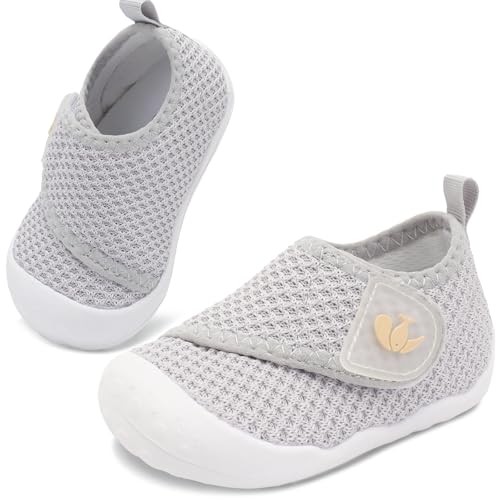
2. FEETCITY Baby First Walker Barefoot Shoes
For babies learning to walk on their toes, these FEETCITY shoes offer a wide toe box and a flexible sole. The rounded front gives little toes room to move, while the lightweight design suits early steps indoors and outside.
A knitted upper lets air circulate and wicks away moisture, which helps keep feet dry through play. Its soft interior is designed not to rub, so babies can wear the shoes for school, walks and other everyday activities.
The TPR sole is lightweight and has a non-slip surface. FEETCITY says it underwent more than 20,000 friction tests; the grip is intended to support crawling and walking on different surfaces.
A reinforced heel adds support around the back of the foot. The shoes come in grey for infants aged 12 to 18 months and weigh about 0.15 pounds, making them easy to carry along when changing shoes.
These first-walker shoes suit families looking for a roomy toe area, breathable upper and flexible sole for indoor and outdoor use. The listing does not provide a specific tiptoe-walking correction feature, so they are best considered as general early-walking shoes.
- Wide toe box leaves room for little toes
- Breathable knit upper wicks away moisture
- Lightweight TPR sole has a non-slip surface
- Reinforced heel supports the back of the foot
- No specific tiptoe-walking correction feature
3. L-RUN A0355 Infant First Walking Shoes
12–18 months is the age range for these L-RUN shoes, which pair a flexible sole with a wide opening for babies learning to walk. Their flat, zero-drop insole keeps the foot level, while the breathable mesh suits everyday indoor and outdoor wear.
A bending zone placed one-third along the shoe lets little feet flex as they step. That can help babies practice balance and a natural walking motion, including children who tend to walk on their toes, though the shoes do not claim to correct toe walking.
The flexible rubber sole provides grip on indoor floors and outdoor surfaces. Mesh allows air to circulate around the feet, and the black color keeps the look simple for daily outfits.
A hook-and-loop strap adjusts the fit and opens wide, making the shoes easier to put on and take off. The roomy opening also helps accommodate different foot shapes without requiring a narrow, fixed entry.
For protection during play, a reinforced toe cap guards the front of the foot, while a reinforced heel shield helps protect the back. These features may be useful as babies move around and bump their shoes against surfaces.
The shoes are listed in black for infants aged 12–18 months. They suit caregivers looking for flexible first walkers with a flat insole, foot protection and a fit that can adjust for growing feet.
- Flat, zero-drop insole supports natural steps
- One-third bending zone helps feet flex naturally
- Wide opening and strap adjust the fit
- Reinforced toe and heel add foot protection
- No major cons
4. Centipede Demon Baby First Walker Shoes
Babies learning to walk get a soft, lightweight shoe with a flexible sole in these Centipede Demon first walkers. The slip-on style suits little ones who are starting to explore on their toes, crawling, or taking early steps.
A knit upper lets air circulate around the foot, while the soft, removable insole adds a cushioned layer. The flexible construction also lets babies feel the ground beneath their feet as they move.
Elastic laces skip tying and help the shoes stay snug, so parents can put them on and take them off quickly. The rubber sole provides grip for indoor and outdoor play, including walking, dancing, and running.
These infant sneakers come in a solid beige color and fit the listed 12–18-month size range. At about a quarter of a pound, the pair is lightweight for little feet during everyday activities.
The shoe’s soft build and breathable knit make it a practical option for babies who are learning to move around. The removable insole can also be taken out as needed, and the lace-free design keeps dressing simple.
For families choosing shoes for a tiptoe walker, these offer a flexible feel and a rubber outsole for everyday steps. They suit babies aged 12 to 18 months who need lightweight shoes for indoor play, outdoor outings, and early walking practice.
- Lightweight pair weighs about a quarter pound
- Flexible sole lets babies feel the ground
- Breathable knit upper helps feet stay fresh
- Elastic slip-on fit makes dressing simpler
- No major cons
5. FEETCITY Baby First Walking Shoes, Wide Toe
For early walking practice at home or outdoors, the FEETCITY baby sneakers pair a wide toe box with a flexible, lightweight build. The roomy front gives little toes space to move, while the shoes suit infants aged 6 to 12 months.
Their TPR soles provide grip on surfaces such as carpet and hardwood, which can help as babies practice walking and running. The title describes them as barefoot shoes, and the flexible construction allows foot movement during early steps.
A hook-and-loop strap adjusts for wider or narrower feet and holds the tongue and upper in place as a child walks. This lets caregivers adjust the fit without choosing a different style for different foot widths.
Soft padding around the inner ankle helps reduce rubbing, and the breathable construction supports everyday wear. The shoes can accompany babies to school, on trips, outdoors, or during play.
The pink-and-purple pair weighs about 0.15 pounds. Its combination of a wide toe area, adjustable closure, and grippy sole suits families looking for lightweight shoes for babies learning to walk, including those who tend to rise onto their toes.
- Wide toe box leaves room for moving toes
- Adjustable strap fits wider or narrower feet
- Flexible, lightweight build suits early walking
- TPR soles grip carpet and hardwood
- No major cons
6. STQ ST2527187 Toddler Barefoot Sneakers
The wide toe box gives little toes room to spread, making these STQ sneakers a possible option for toddlers who walk on their toes. Their zero-drop sole keeps the heel and forefoot at the same level, while the barefoot-style design is intended to mimic walking without shoes.
A flexible TPR sole adds grip for everyday steps and play. The maker says its tread helps prevent slips, and the material also resists wear from regular use indoors or outside.
Hook-and-loop straps adjust around the foot, and a fixed tongue helps parents get the shoes on and off. The closure can also let toddlers practice putting them on by themselves.
The shoes come in black and white in size 6 Wide Toddler. Their lightweight, breathable build suits school, daycare, gym sessions, tennis and casual activities.
The listing describes them as suitable for boys and girls with wide feet, though this title specifies toddler boys. These are everyday sneakers for families looking for a roomy toe area and a flat sole; the product details do not establish that they address tiptoe walking itself.
- Wide toe box gives toes room to move freely
- Zero-drop sole supports a barefoot-style walking feel
- Flexible, non-slip TPR sole helps prevent slips
- Hook-and-loop straps make shoes easy to put on
- No major cons
7. Eashi Baby Non-Skid Indoor Walking Shoes
Eashi makes soft sock-style shoes for babies learning to walk, with a flexible phylon sole and a wide toe area. The sole is lightweight and designed to grip the floor, while the toe cap adds a layer over the front of the foot during crawling and early steps.
The knitted nylon upper allows airflow and wicks moisture away from little feet. Its stretchy construction slips on and off, and the listing says the shoes can be hand- or machine-washed.
A high-top shape provides ankle support, and the elastic sock style keeps the shoes close to the foot. For tiptoe walkers, the soft, flexible sole offers a lightweight option, though the product details do not describe a specific feature for correcting tiptoe walking.
The selected Plaid Pink size fits 12- to 15-month-old infants and is listed as size 5. Other listed size choices cover ages from birth to 24 months, with sizes ranging from 3.5 to 6.5.
These shoes suit caregivers looking for washable, breathable footwear for crawling and early walking. Their flexible sole, grippy bottom and protective toe area make them a practical choice for babies who need a soft shoe for indoor practice and occasional outdoor wear.
- Grippy, lightweight soles help reduce slips
- High tops add ankle support for new walkers
- Wide toe box helps protect toes while crawling
- Breathable, moisture-wicking knit helps keep feet dry
- No major cons
How to Choose the Best Shoes for Tip Toe Walkers
Choosing shoes for a child who walks on tiptoe means balancing toe space, flexibility, grip and a secure fit. The right choice depends on the child’s age, walking pattern, daily setting and whether a clinician has advised specific footwear.
| If You Need | Look For | Expect |
|---|---|---|
| Room for growing toes | Wide, rounded toe box | Bulkier shape |
| Easy dressing | Adjustable hook-and-loop straps | Straps need readjusting |
| Indoor grip | Flexible, textured outsole | Less protection from rough ground |
| Breathable everyday wear | Mesh or knit upper | Less warmth in cold weather |
| Extra toe protection | Reinforced toe cap | Stiffer front |
| Quick changes | Elastic slip-on opening | Less fit adjustment |
| Easy cleaning | Washable materials | More care instructions |
Fit And Toe Space
Fit comes first because a shoe that squeezes the toes or slips at the heel can make walking less comfortable. Measure both feet while the child is standing, and use the larger foot to choose a size.
Look for a rounded, foot-shaped toe box that lets the toes spread without pressing against the sides. Leave roughly a thumb’s width of space in front, but avoid excess length that lets the foot slide.
Width matters alongside length, especially for children with broad feet or toes that fan out. A wide label alone does not ensure a roomy fit, so assess the shoe’s actual shape and how securely it stays on.
Recheck fit every few months and after growth spurts, since infant and toddler feet change quickly. If socks bunch or the heel lifts repeatedly, try another size or shape rather than tightening the shoe excessively.
Walking Pattern And Clinical Advice
Tiptoe walking has different causes, and shoes do not diagnose or correct them. If the child often walks on tiptoe, starts doing so suddenly, or has pain, stiffness, weakness or uneven movement, ask a pediatric clinician for guidance.
For a child who is otherwise developing typically, flexible everyday shoes may offer protection while allowing natural foot movement. Avoid assuming that a zero-drop sole or a “barefoot” label will change a walking pattern.
A clinician may recommend particular footwear or treatment based on the child’s needs. Follow that advice over general shopping rules, especially when the child has a diagnosed condition, limited ankle movement or frequent falls.
Sole Flexibility And Shape
A flexible sole bends more readily as the foot moves, which suits early walkers who need to feel the ground. Gently bend the shoe near the ball of the foot; it should flex there rather than fold in half.
Zero-drop means the heel and forefoot sit at the same height. This may suit families seeking a level sole, but it is not a treatment for toe walking and is not the right choice for every child.
Very soft soles feel light and bend easily, but they offer less protection on rough surfaces. A thicker or stiffer sole adds a barrier underfoot, though it can weigh more and restrict movement.
Grip And Surface
A textured outsole helps reduce slipping on smooth indoor floors, but no tread makes a shoe slip-proof. Look for a flexible rubber or similar sole with visible grip, and match it to where the child walks most.
For outdoor use, consider whether the sole protects against grit, damp ground and small bumps. More coverage usually adds weight or stiffness, so a simple indoor shoe may feel easier for short periods at home.
Keep soles clean and replace shoes when the tread is worn smooth or the material cracks. Wet floors, loose rugs and uneven ground still call for close supervision, even when the outsole has traction.
Secure Closure And Heel Hold
Adjustable straps help you fine-tune the fit and make shoes easier to put on than laces. They suit children whose feet vary in width, but straps need periodic adjustment as socks and foot size change.
Slip-on or elastic openings are quick for frequent changes, though they offer less control over tightness. Choose them only when the shoe stays on without squeezing the foot or leaving the heel loose.
A stable heel should sit comfortably without rubbing or lifting with each step. Reinforced heel panels may hold their shape, but a firm structure is not automatically better; avoid pressure, redness or restricted ankle movement.
Upper Material And Protection
Mesh and knit uppers allow airflow, which helps during warm weather or active play. They often provide less warmth and weather protection than denser materials, so consider socks and the child’s usual setting.
Cotton, nylon knit and mesh differ in feel, drying time and care needs. For sweaty feet, moisture-wicking fabric may help move dampness away, while a washable upper can be useful after messy play.
A reinforced toe cap shields the front of the shoe from scuffs and bumps, but it can make that area less flexible. Choose extra protection for outdoor play, and prioritize a softer front for comfortable indoor wear.
Weight And Daily Comfort
A lightweight shoe takes less effort to lift, which is useful for a young child still building balance and coordination. Compare the actual weight when listed, but also consider whether a thicker sole adds bulk.
Soft linings and padding can reduce rubbing, particularly around the ankle, but too much padding may make a shoe warm or crowd the foot. The shoe should feel secure without tightness or pressure marks after wear.
Removable insoles make it easier to inspect fit and clean the inside. They are useful only if taking them out does not leave the shoe unstable or change the fit in a way that causes slipping.
Age, Size And Putting Shoes On
Age ranges are rough guides, not reliable substitutes for foot measurements. Use the maker’s size chart and measure the child’s feet, since two children of the same age may need different sizes.
Hook-and-loop straps suit families who want quick, adjustable fastening, while elastic slip-ons save time when shoes come off often. Fixed tongues can stay in place, but make sure they do not bunch or press on the foot.
For a child who is not walking independently, shoes are mainly for warmth or protection outdoors. Bare feet or socks may be more comfortable indoors when the floor is safe and the child needs room to move.
Price And Value
Lower-priced shoes may cover basic needs such as a flexible sole, breathable upper and simple grip. They suit occasional wear or fast-growing feet, but inspect construction and fit rather than relying on price alone.
Paying more is worthwhile when the shoe offers a better fit, durable materials, easier cleaning or a closure your family will use daily. Extra features do not justify the cost if they add stiffness or do not suit the child.
Care And Replacement
Follow the care instructions because washing methods vary by fabric and sole construction. Machine washing is convenient when permitted, while hand washing takes longer but may help preserve shape and adhesive joins.
Replace shoes when the toes reach the front, the heel no longer holds, or the sole loses grip. A damaged or outgrown shoe can affect comfort and stability, so reassess fit often rather than waiting for a season change.
Frequently Asked Questions
Which shoes are designed to help little feet move naturally?
The Ten Little First Walker Cotton Baby Shoes, FEETCITY Baby First Walker Barefoot Shoes, and L-RUN A0355 Infant First Walking Shoes feature wide toe space or zero-drop designs to support natural movement.
Do any of these shoes have non-slip soles for indoor walking?
The Eashi Baby Non-Skid Indoor Walking Shoes have soft, lightweight phylon soles designed to provide grip and help prevent slips.
What materials are the Ten Little First Walker Cotton Baby Shoes made from?
They are cotton baby shoes with zero-drop soles and a wide toe box. The listed details don’t specify additional materials or construction features.
What comes in the box with these shoes?
The product details provided don’t list package contents beyond the shoes, so check the retailer’s listing for what is included.
Should I choose the FEETCITY Baby First Walker Barefoot Shoes or the FEETCITY Baby First Walking Shoes, Wide Toe?
Choose the Barefoot Shoes if you prioritize a wide, round toe that supports free movement and balance; choose the Wide Toe version if you want a roomy toe wrap that also helps protect the feet.
Which shoes may suit a toddler who needs support for posture and balance?
The STQ ST2527187 Toddler Barefoot Sneakers have zero-drop soles intended to help toddlers maintain posture and balance.
What should I look for when choosing shoes for a tiptoe walker?
Compare fit, toe room, flexibility, and grip, and consider discussing persistent toe walking with a pediatrician. The reviewed options include wide-toe designs and flexible soles, but the product details don’t establish that any shoe corrects tiptoe walking.
So, What Should You Buy?
Ten Little First Walker Cotton Baby Shoes are the best pick for most families, pairing zero-drop soles with a wide toe box to support healthy foot development. For a budget-friendly alternative, consider the L-RUN A0355, whose flat insoles mimic barefoot walking; the FEETCITY wide-toe shoes suit little feet needing room to move.
Choose Centipede Demon for a flexible, lightweight feel, or Eashi for indoor grip. For toddlers focused on posture and balance, the STQ barefoot sneakers are worth considering. Pick the pair that best fits your child’s needs.


