

7 Best Shoes for Track Workouts to Support Smooth, Efficient Running
Track workouts help you build speed, sharpen your pace, and add structure to your running routine. Regular trainers can feel bulky on quick laps, while racing spikes often feel too aggressive for mixed drills or steady intervals.
Track shoes offer a practical middle ground for focused sessions. Their lighter build helps your feet move freely, and responsive cushioning softens repeated strides without the extra bulk of many everyday running shoes.
Many pairs add grippy outsoles for confident turns, breathable uppers to help feet stay cooler, and secure fits that keep the shoe steady through sprints and tempo work. These details make fast repeats and varied track sessions more comfortable.
Track shoes differ in cushioning, fit, traction, and support, so consider your workout style and comfort preferences. Explore the best shoes for track workouts below to find a pair suited to your next session.
7 Best Shoes for Track Workouts Reviews

1.adidas Adizero Distancestar Track Shoes
Updated TPU traction helps you accelerate through tight track turns

2.Hiuzylqx 22020488-D-7.5 Track Shoes
Forefoot spikes provide traction and acceleration on track surfaces

3.Nike Revolution 8 Road Running Shoes
Foam midsole and rocker geometry cushion each step as you run

4.Zakey 1906 Track and Field Racing Shoes
Eight pre-installed spikes provide grip for track races and running
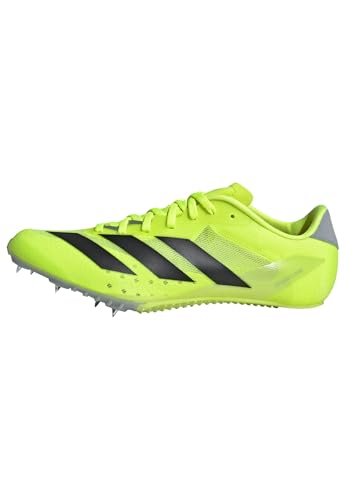
5.adidas Adizero Sprintstar Track Shoes
Rubberized outsole zones boost power transfer and cornering stability

6.Kricely M903 Trail Running Shoes
Breathable mesh upper lets air move to help keep feet dry and cool

7.Nike Revolution 8 Road Running Shoes
More breathable mesh than Revolution 7 helps keep feet cool
1. adidas Adizero Distancestar Track Shoes
The adidas Adizero Distancestar handles track workouts from 400-meter races through 5,000-meter events. Its TPU outsole helps runners grip the track through tight bends and push forward on straight sections, which suits repeated laps and varied race distances.
Responsive foam sits where runners need cushioning and energy return, without adding unnecessary weight. That combination supports faster efforts while keeping the shoe suited to distance work, where comfort needs to hold up through multiple laps.
The flexible upper supports and holds the foot in place during hard efforts. Ventilation helps keep feet cooler and drier during workouts, while the shoe’s secure fit stays useful from the start through the final kick.
At about 1.5 pounds, the pair keeps weight in check for track sessions. The black, Zero Metallic and white colorway gives it a straightforward look, and the listed size is 8.5 men’s, equivalent to 9.5 women’s.
Adidas says the shoe uses at least 20 percent recycled materials. That recycled content adds an environmental consideration without changing its core role as a track spike for distance events.
This model suits runners training for 400-meter to 5,000-meter races who want track traction, responsive cushioning and a ventilated fit. Its event range also makes it worth considering for athletes who train across multiple lap distances.
- TPU traction supports corners and straightaways
- Responsive foam returns energy without extra weight
- Ventilated upper helps keep feet cooler and drier
- Covers track events from 400m to 5000m
- Uses at least 20% recycled materials
- No major cons
2. Hiuzylqx 22020488-D-7.5 Track Shoes
For sprint drills and track races, the Hiuzylqx spikes offer a lightweight mesh upper and forefoot traction for moving across the track. The size 7.5 shoe has a rubber outsole with spikes placed for sprinting and other track events.
The spike setup sits under the forefoot, where it supports grip and acceleration on track surfaces. That makes this pair suited to short, fast efforts as well as track workouts that include sprint practice.
Breathable mesh forms the upper and keeps the shoe lightweight. Its gradient pattern gives the shoe a distinct look, while the mesh lets air reach the foot during training and competition.
Traditional laces pass through reinforced eyelets, so you can adjust the fit and secure the shoe around your foot. This setup gives you a familiar way to tighten or loosen the shoe before a workout.
The rubber outsole adds a durable base, and its spike placement targets track events rather than general everyday use. The listing gives the color as D and the size as 7.5, so check that size against your needs before choosing it.
This pair suits runners who want forefoot spikes and a breathable upper for sprinting, racing or track drills. Its features focus on traction, a secure lace-up fit and a lightweight feel for workouts on the track.
- Forefoot spikes support grip and acceleration
- Breathable mesh helps keep feet cool during training
- Reinforced eyelets support an adjustable, secure fit
- Rubber outsole places spikes for track events
- No major cons
3. Nike Revolution 8 Road Running Shoes
The foam midsole cushions each stride in the Nike Revolution 8, making it a road-running option for track workouts and everyday runs. Its rocker-shaped geometry guides the foot through each step, while the forefoot grooves let the sole flex as you move.
A breathable mesh upper helps keep the shoe comfortable during a workout. The cushioned foam and flexible forefoot suit runners who want a softer feel as they pick up the pace or settle into a steady run.
The outsole uses Nike’s own design, with grooves across the front to support foot movement. Together, those details give the shoe a running-focused setup for laps, warm-ups and road miles, though the data does not specify track-specific traction or support.
Touch points on the heel and tongue make it easier to pull the shoes on and off. That practical detail helps when you change shoes before a workout or head out for a run.
This black, white and black size 11 pair weighs about 0.6 pounds. Its simple color scheme suits runners who want a neutral-looking shoe, and the listed weight keeps the pair’s carrying burden modest.
The Revolution 8 suits runners looking for cushioned road shoes for workouts and regular runs, especially those who value a breathable upper and easy on-and-off handling. Track-focused buyers may want to check whether its road-running design fits their training surface.
- Foam midsole cushions each running stride
- Mesh upper supports airflow during workouts
- Forefoot grooves allow the sole to flex
- Heel and tongue touch points ease on and off
- No major cons
4. Zakey 1906 Track and Field Racing Shoes
Runners and jumpers who need track footwear for school tests or race events get a lightweight pair with eight pre-installed spikes. The Zakey shoes are listed for men, women and kids, so they suit a range of buyers looking for one pair for track workouts.
Eight spikes come fitted to the shoes, giving you a ready-to-use setup for running and jumping. The package also includes extra spikes and a tool, which gives you replacements and the equipment to change them.
The shoes have a breathable construction, a useful feature during active track sessions. Their lightweight build also keeps the footwear from adding unnecessary weight as you run or practice jumps.
The listing describes them as racing shoes and names school track exams, racing and running among their uses. They may suit buyers who want spikes for several kinds of track activity rather than a pair for everyday walking.
This listing specifies size 5.5 and a Blackred color. The available information does not give a spike length, shoe material or other sizes, so buyers should check the fit and details before choosing them.
For students preparing for a school track exam, or runners and jumpers seeking basic spike footwear, these shoes offer pre-installed spikes and extra replacements. They are best suited to buyers whose size and event needs match the listing.
- Eight pre-installed spikes suit track sessions
- Lightweight construction helps during active workouts
- Extra spikes and tool come in the package
- No major cons
5. adidas Adizero Sprintstar Track Shoes
On the track, adidas Adizero Sprintstar spikes are made for sprint workouts from 50 to 400 meters. Their grip and low-weight cushioning suit runners who want a close feel for the ground during fast efforts.
The outsole combines an enhanced traction layout with rubberized zones. That setup supports push-offs and cornering across 50, 100, 200 and 400 meters, so the shoes cover several sprint distances.
Molded cushioning runs from heel to toe and returns energy without adding much weight. At about 0.45 pounds, the pair keeps its listed weight low while offering cushioning for repeated runs.
Breathable synthetic mesh lets air reach the feet during intense bursts. The upper also includes at least 20 percent recycled materials, while padded heel support helps hold the foot securely inside the shoe.
The Lucid Lemon, Black and Halo Silver colorway gives the shoes a bright look on the track. They come in the listed 10.5 men’s size, equivalent to 11.5 in women’s sizing.
These spikes suit runners focused on short track events who want aggressive traction, a breathable upper and lightweight cushioning. Their stated range also includes the 400 meters, making them an option for sprinters who train across several distances.
- Traction zones support sprinting and corners
- Lightweight cushioning spans heel to toe
- Breathable mesh helps air reach the feet
- Padded heel support helps secure the fit
- No major cons
6. Kricely M903 Trail Running Shoes
Rubber soles give these Kricely shoes grip for track workouts, outdoor runs and other training. Their mesh uppers allow air to move around your feet, while the lightweight construction offers support for runs and gym sessions.
The tread is designed to help you find footing on trails and during walks. Its rubber sole also suits hiking and other outdoor activities, so the shoes can move between track workouts and everyday use.
For training beyond running, the title lists tennis, cross-training and gym use. You can also wear them for cycling, jogging or walking, though the product details do not give a track-specific cushioning or support system.
The mesh upper helps your feet stay cooler during exercise by allowing airflow. The listing describes the shoes as lightweight, which can be useful when your workout includes running, walking or other movement.
Orange is the listed color, and this pair is size 11. The styling is intended to work with jeans, casual pants, cropped pants and shorts, so you can also use them for daily wear or travel.
These shoes suit buyers who want one pair for general workouts, outdoor activities and casual outfits. Track-focused runners who need details about cushioning, fit or specialized support may want to check those points before choosing them.
- Breathable mesh helps air circulate during workouts
- Lightweight build supports movement across activities
- Rubber tread provides grip for outdoor footing
- Works for running, gym training and daily wear
- No major cons
7. Nike Revolution 8 Road Running Shoes
Nike offers these women’s road-running shoes for track workouts, with a mesh upper and foam cushioning for repeated laps. The Revolution 8 uses rocker geometry in its midsole, which helps cushion each step as you run.
The mesh upper lets air pass through, helping keep feet cooler during a workout. Nike says it breathes better than the Revolution 7, a useful detail for runners who train in warmer conditions or spend longer sessions on the track.
Underfoot, the foam midsole pairs its cushioning with a curved shape designed around the running stride. Flex grooves in the forefoot let the outsole bend as you push off, adding a cushioned feel through each step.
The outsole has Nike’s running design, while touch points at the heel and tongue make the shoes feel natural as you put them on or take them off. These details keep the focus on everyday running use rather than specialized track spikes.
This Silt Red, White, Particle Rose and Tattoo colorway comes in size 9.5. At about 0.6 pounds, the pair has a light listed weight, and its road-running design can suit track sessions as well as regular runs.
As the roundup’s final choice, it suits runners who want breathable mesh and foam cushioning for track workouts, without a track-specific spike listed in the details.
- Breathable mesh helps keep feet cooler
- Foam midsole cushions steps with rocker geometry
- Forefoot flex grooves support a cushioned stride
- About 0.6 pounds for a light listed weight
- Road-running design is not track-specific
How to Choose the Best Shoes for Track Workouts
Choosing track shoes starts with matching the shoe to your events and workout surface, then weighing fit, traction, cushioning, and price. Training plans, experience, and whether you need spikes or everyday running shoes all shape the right choice.
| If You Need | Look For | Expect |
|---|---|---|
| Sprint acceleration | Forefoot spikes and a secure fit | Firmer feel underfoot |
| Middle-distance workouts | Balanced cushioning and traction | More weight than sprint shoes |
| Road warm-ups | Cushioned road-running construction | Less grip on track curves |
| Jumping or varied events | Stable fit and suitable spike layout | Less event-specific performance |
| One pair for mixed training | Durable, versatile outsole | Compromises in speed and grip |
| Young or growing athletes | Accurate sizing and replaceable spikes | More frequent fit checks |
Event and Workout Type
Start with your main event, because sprinting, distance running, and jumping place different demands on a shoe. Short sprints reward a close fit and strong forefoot grip, while longer sessions call for comfort over repeated laps.
For workouts from 400 meters through several kilometers, look for a design that balances traction with cushioning. A sprint-focused shoe often feels too firm for longer repetitions, while a distance-oriented option can feel less direct during acceleration.
Your training week also matters: drills, warm-ups, intervals, and cool-downs may happen in different places. If most sessions are on a track, choose for track grip; if road miles dominate, prioritize a road-running shoe.
Track Surface and Traction
A track spike uses removable metal points to bite into the surface, helping with starts, bends, and fast running. Look for a forefoot spike plate and confirm that its layout suits your event and the track rules.
Spike length and placement affect grip and feel, so follow the facility’s rules before buying replacement points. More aggressive traction can help on a dry track, but it feels harsh on pavement and is unsuitable for many indoor floors.
For mixed training or general fitness, a rubber outsole avoids the hassle of changing spikes and works better on hard paths. Its grip is less specialized, so it may not feel as secure during sharp turns at speed.
Fit and Sizing
A track shoe should hold your heel and midfoot without pinching, while leaving enough room for toes to spread. Try it with your usual running socks, and make sure your toes do not press against the front.
Sizing varies between models and between men’s and women’s listings, so use the maker’s size chart rather than relying only on a number. If you are between sizes, compare the fit guidance and return terms before ordering.
A snug fit helps limit sliding during acceleration, but tightness can cause rubbing or numbness. Young athletes need particular care: allow modest toe room, then reassess often as feet grow and training increases.
Cushioning and Feel
Cushioning shapes how each lap feels, especially during repeated intervals or longer track sessions. More foam can soften impact, while a thinner, firmer platform gives a closer feel of the ground and often suits short, fast efforts.
Look for cushioning that matches your event and comfort needs, not simply the largest amount. Distance runners and newer athletes often prefer more underfoot softness, while sprinters may favor a firmer, more direct platform.
Some midsoles use a rocker shape, which curves the sole to guide the foot forward. That can feel smooth during steady running, but it may feel unfamiliar during sprint drills or strength work.
Shoe Type and Versatility
Spikes are built for track grip and speed, while road-running shoes suit warm-ups, easy runs, and pavement. A general training shoe may cover gym work and jogging, but usually lacks the event-specific traction of a spike.
If you want one pair for varied sessions, decide which activity deserves priority. A versatile rubber sole is practical for mixed surfaces, but it will not offer the same bite as spikes on a fast track.
Avoid using track spikes for long stretches on pavement, where the points and firm construction can feel uncomfortable. Keep a second pair for warm-ups or road running if your routine regularly leaves the track.
Weight and Upper
Lighter shoes can feel less cumbersome during quick repetitions, but weight alone does not determine comfort or speed. Compare weight alongside fit, traction, and cushioning, since a very light shoe may feel too firm for your sessions.
A breathable mesh or synthetic-mesh upper helps release heat during hard workouts. Look for reinforced areas where the shoe needs support, because an airy upper that stretches too much can let your foot shift.
Traditional laces allow small fit adjustments across the midfoot, and reinforced eyelets may help them stay secure. Tie the shoe firmly without creating pressure points, especially if you plan to wear it for longer intervals.
Durability and Spike Care
Track shoes face repeated bending, abrasion, and forceful push-offs, so inspect the outsole, upper seams, and heel support. Rubber wear zones can add protection in high-contact areas, though they can also add some weight.
For spikes, find out whether points are removable and whether a tool or spare set is included. Replace worn or bent points promptly, because damaged traction can change your grip and make running feel uneven.
Rotating shoes between track sessions and other training can reduce wear on a specialized pair. Let them dry after workouts, and avoid storing damp shoes in a closed bag, where moisture can linger.
Price and Value
Lower-priced options may cover basic workouts, but confirm that the construction, fit, and traction suit your event before buying. A low price is less useful if the shoe feels uncomfortable or lacks the grip your sessions require.
Higher prices are most worthwhile when they bring a fit that suits your foot, durable materials, or event-appropriate traction. For occasional training, a simpler shoe may be enough; frequent racers have more reason to pay for a specialized design.
Include replacement spikes, extra training shoes, and return shipping in your budget. A pair that fits well and covers your main workouts usually offers more practical value than paying extra for features you will rarely use.
Return Policy and Warranty
Online sizing makes a clear return policy especially useful, so read the conditions before ordering. Check whether shoes must remain unworn outdoors and whether the seller covers return shipping if the fit is wrong.
Warranty terms vary, and coverage usually addresses manufacturing faults rather than normal outsole wear. Keep proof of purchase and review the stated coverage period, especially if you expect frequent sessions or need a shoe for competition.
Frequently Asked Questions
Do track workout shoes need a power source?
No. All seven products are footwear and don’t require batteries or electricity.
What should I look for in the materials and build?
The adidas Adizero Distancestar uses updated TPU traction, while the Kricely M903 has a breathable mesh upper. Choose a build that suits your workout and the surfaces you run on.
What comes in the box with these shoes?
The product details don’t specify box contents, so check the individual listing for what’s included.
Should I choose the adidas Adizero Distancestar or the adidas Adizero Sprintstar?
The Distancestar highlights TPU traction for accelerating through tight turns, while the Sprintstar has rubberized outsole zones for power transfer and cornering stability. Compare those priorities with your track workouts when choosing.
Are the Nike Revolution 8 shoes spiked for track races?
The listed features describe a foam midsole and rocker geometry for cushioning, plus breathable mesh; they don’t mention spikes. The Zakey 1906, by contrast, comes with eight pre-installed spikes.
Which shoes are described as helping keep feet cool?
The Kricely M903’s breathable mesh helps air move, and the Nike Revolution 8 listing says its mesh is more breathable than the Revolution 7.
So, What Should You Buy?
For most track workouts, the adidas Adizero Distancestar is the best pick, with updated TPU traction to help you accelerate through tight turns. If you want a track-focused option with eight pre-installed spikes, choose the Zakey 1906; for power transfer and cornering stability, the adidas Adizero Sprintstar is a strong alternative.
Prefer cushioning? The Nike Revolution 8 pairs a foam midsole with rocker geometry, and its more breathable mesh helps keep feet cool. For airflow, consider the Kricely M903. Choose the model that best fits your workouts and priorities.


