

7 Best Shoes for Wide Feet Kids That Keep Little Feet Comfortable
Comfortable shoes help kids run, play, and get through busy school days with happy feet. Standard-width pairs can pinch broad toes or press across the sides, while sizing up often leaves extra room at the heel and makes walking feel less secure.
Wide-width kids’ shoes give growing feet more space across the forefoot without relying on an overly long size. Roomier toe boxes let toes spread naturally, and adjustable laces or straps help keep each shoe snug around your child’s foot.
Flexible soles support active play, cushioned insoles soften each step, and breathable uppers help feet stay comfortable through the day. Durable materials also handle playground trips and frequent wear, so your child can move with ease from class to home.
Shoes differ in width, closure style, cushioning, and sizing, so consider your child’s foot shape and daily routine. Explore the best shoes for wide feet kids below to find a comfortable pair for their next adventure.
7 Best Shoes for Wide Feet Kids Reviews

1.WHITIN W8K2 Wide Toe Box Barefoot Sneakers
Wide toe boxes give growing toes room for healthy foot development

2.Merrell Trail Chaser Hook and Loop Shoes
M Select GRIP outsole provides superior traction on trails and paths

3.New Balance Rave Run V2 Running Shoes
Lightweight IMEVA midsole cushions little feet from play to class

4.LeIsfIt Kids Barefoot Wide Sneakers
Wide toe box lets feet splay naturally for comfort during all-day play

5.BRONAX Wide Toe Box Athletic Sneakers
Wide toe box gives growing feet room for natural movement during play
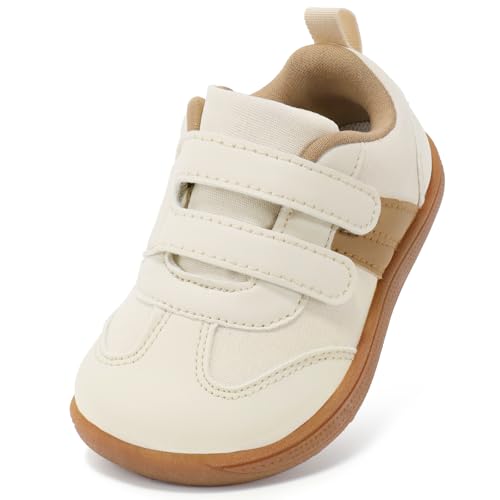
6.STQ KIDS Wide Toe Box Barefoot Sneakers
Wide toe box lets little toes splay and grip for better balance

7.WHITIN WK102 Wide Toe Box Barefoot Shoes
Zero-drop flexible soles support a natural stance and free movement
1. WHITIN W8K2 Wide Toe Box Barefoot Sneakers
WHITIN kids’ barefoot sneakers give wide feet room to move during everyday play. The wide toe box leaves space for growing toes to spread and wiggle, which can help keep them comfortable through PE class, running and time on the playground.
Their zero-drop sole keeps the heel and forefoot at the same height. It supports a barefoot-like feel and natural movement during active play, while the sole’s sensory connection may appeal to kids who like to feel the ground beneath their feet.
The upper uses breathable mesh without sewn seams, giving the shoe a close-fitting feel. Reinforced toe caps and water-resistant overlays add protection around the toes and help the shoes hold up to regular activity.
Two hook-and-loop closures make it easier for children to put the sneakers on and adjust the fit themselves. They come in size 11 Wide Little Kid and the listed Black Multi color, a practical option for kids who need extra toe room.
The product title also describes them as lightweight and suited to casual everyday wear. These shoes suit children with wide feet who need room for growing toes and want an easy-to-adjust pair for school, PE and play.
- Wide toe box gives growing toes room to move
- Zero-drop sole supports natural movement during play
- Breathable mesh upper has no sewn seams
- Hook-and-loop straps help kids adjust the fit
- Reinforced toes add protection for active play
- Water-resistant overlays do not make them waterproof
2. Merrell Trail Chaser Hook and Loop Shoes
For kids who need extra room across the foot, the Merrell Trail Chaser comes in a 4.5 Wide Big Kid size. Its hook-and-loop closure lets children adjust the fit and fasten the shoes without tying laces.
The suede and mesh upper combines two materials across the shoe’s exterior. Mesh provides a lighter-feeling upper, while suede adds another material around the foot; the data does not specify how much of each material the shoe uses.
Underfoot, a removable EVA footbed gives the shoe a cushioned layer. You can take it out for cleaning or to make room for another footbed, which may help families who want that option.
The non-marking outsole helps avoid leaving marks on indoor floors. M Select GRIP adds traction to the outsole, a useful feature for kids moving between everyday surfaces.
The navy-and-green color scheme gives the shoe a two-tone look, and its half-pound weight keeps it light to carry. Its wide sizing is the key point for families choosing shoes for children with wider feet.
This trail-style shoe suits big kids who need a wide fit, want a closure they can adjust, and could use a removable footbed. The listed size is 4.5 Wide Big Kid, so check that against the child’s current size.
- 4.5 Wide Big Kid sizing for more room
- Adjustable hook-and-loop closure secures the fit
- Removable EVA footbed offers replacement options
- M Select GRIP outsole adds traction
- Suede and mesh upper may need care
3. New Balance Rave Run V2 Running Shoes
10 X-Wide toddler sizing gives the New Balance Rave Run V2 room for wider little feet. Its lightweight IMEVA midsole cushions each step, which helps during walks between the classroom and playground.
A synthetic and mesh upper keeps the shoe light and allows airflow around active feet. The black-and-white design pairs with everyday clothes, while the hook-and-loop closure makes it easier for young children to put the shoes on and take them off.
No-sew overlays add support around the midfoot and help hold the foot in place. They avoid stitched seams across the upper, while the rubber outsole provides a durable base for regular wear.
At about 0.7 pounds, the pair is light to carry and wear. The 10 X-Wide toddler size makes width a central part of its fit, though buyers should still check that the listed size matches their child’s feet.
This shoe suits toddlers who need a wide fit for everyday play, school and short runs. Its cushioning, breathable upper and grippy rubber sole make it a practical option for families shopping for kids’ shoes in wider sizes.
- X-wide toddler sizing gives broad feet more room
- Lightweight midsole cushioning helps keep feet comfortable
- Breathable mesh upper helps keep feet cool during play
- Durable rubber outsole is built for all-day wear
- No major cons
4. LeIsfIt Kids Barefoot Wide Sneakers
Kids who need room for their toes get a wide toe box in the LeIsfIt barefoot-inspired shoes. The Dark Grey pair comes in size 2 Big Kid, with a shape that lets toes spread naturally during walking, climbing and everyday play.
Breathable knit uppers allow airflow around active feet, which can help them feel cooler and drier during outdoor activities. Their lightweight construction also suits children who move between walking, climbing and training.
A flexible rubber outsole provides grip on different surfaces for running, hiking and play. The flexible build lets the shoe move with a child’s foot, while the traction helps with footing on outdoor routes.
The rubber bumper at each toe adds a protective layer against bumps and stubs. That detail may be useful on trails and playgrounds, where toes can meet rocks, equipment or other obstacles.
The barefoot-inspired design pairs a wide toe area with a flexible sole for children who prefer more room for their feet. Its listed Dark Grey color and size 2 Big Kid option keep the choice straightforward for families checking fit.
These shoes suit active kids who need a roomy toe box for walking, climbing or training. The breathable knit, flexible grip and toe bumper make them a practical option for families seeking wide-fit children’s footwear.
- Wide toe box lets toes spread naturally
- Breathable knit uppers allow airflow around feet
- Flexible rubber outsole grips varied surfaces
- Rubber toe bumper helps protect against stubs
- No major cons
5. BRONAX Wide Toe Box Athletic Sneakers
For playgrounds and school days, the BRONAX wide kids’ shoes give growing feet room to move. Their wide toe box allows natural movement, making them a useful option for children who need extra space across the front of a shoe.
The breathable mesh upper helps keep kids’ feet dry during active days. It suits play and everyday wear, while the dark blue color keeps the look simple for school or the playground.
A cushioned EVA midsole adds support on longer walks and busy days on their feet. The cushioning can make these sneakers more comfortable for children who spend time moving between classes, outdoor play and other daily activities.
The rubber outsole provides grip on both dry and wet surfaces. That feature can help kids keep their footing as they move around different parts of a playground or school.
A hook-and-loop strap makes the shoes easy for children to put on and fasten. This gives kids a straightforward option when they are getting ready for school or play, without needing to tie laces.
These dark blue shoes come in size 2 Wide Little Kid. They suit families looking for a roomy fit, breathable uppers and a cushioned sole for active children, though the listed size limits them to buyers whose child needs that size.
- Wide toe box gives growing feet room
- Breathable mesh helps keep feet dry
- Cushioned EVA midsole suits longer days
- Rubber outsole grips wet and dry ground
- Hook-and-loop strap makes them easy to fasten
- No major cons
6. STQ KIDS Wide Toe Box Barefoot Sneakers
The wide toe box gives toddler toes room to spread, which makes these shoes a fit to consider for children with wider feet. It also lets little feet grip naturally as toddlers walk and play.
A zero-drop sole keeps the heel and forefoot at the same level, giving the shoe a barefoot-style feel. The maker says this design supports foot muscle development, upright posture and balance as children learn to walk.
The flexible TPR outsole bends with a child’s foot, while its tread is meant to grip indoor floors, wet grass and park surfaces. That combination suits toddlers who move between home and outdoor play.
Two hook-and-loop straps open the shoes wide for easier putting on and taking off. You can adjust them around the foot, and the maker says they help hold the heel in place during active play.
The upper uses breathable canvas for airflow during daycare, preschool or outdoor outings. The listed Beige Brown color and toddler size 8 Wide give buyers a specific option to check against their child’s fit.
These sneakers suit families looking for a roomy toe area and flexible, flat soles for early walking and everyday play. The data does not list a removable insole or other fit adjustments, so buyers who need those details may want to check before choosing.
- Wide toe box leaves room for toes to spread
- Flexible TPR tread grips varied play surfaces
- Dual straps adjust and open wide for dressing
- Zero-drop sole offers a barefoot-style feel
- Zero-drop style may not suit every child
7. WHITIN WK102 Wide Toe Box Barefoot Shoes
WHITIN makes these wide-fit barefoot shoes for kids who need space across the toes. The size 11 Wide Little Kid fit pairs a roomy toe box with flexible, zero-drop soles, which keep the heel and forefoot at the same level.
The wide toe box gives growing toes room to move during everyday wear, play and PE. Flexible soles allow natural movement, while the zero-drop shape supports a level stance as kids walk, run and jump.
For outdoor play, the rubber outsole provides traction on different kinds of terrain. Kids can use the shoes for running, jumping, PE and other outdoor activities, so the grip suits more than one setting.
An upper made from breathable mesh has suede overlays for added structure. Elastic no-tie laces and adjustable hook-and-loop straps help secure the shoes without tying, and let caregivers adjust the fit.
The Blue Gum color gives the pair a blue-and-gum look. Its barefoot-style construction focuses on flexibility and toe room rather than a raised heel, which may suit children whose shoes feel tight across the front.
These shoes suit families looking for a wide toe box, flexible soles and adjustable fastening in a kids’ shoe. As our final pick, they offer a straightforward option for wide-footed children who play indoors and outdoors.
- Wide toe box leaves growing toes room
- Flexible zero-drop soles support natural movement
- Rubber outsole grips for play and PE
- Adjustable straps help secure the fit
- Suede overlays may need extra care
How to Choose the Best Shoes for Wide Feet Kids
Choosing shoes for wide feet affects comfort, movement and how long a pair fits. Your child’s foot shape, activity, preferred cushioning, fastening skills and the store’s return policy all help determine which features deserve priority.
| If You Need | Look For | Expect |
|---|---|---|
| Room for spreading toes | Wide toe box, roomy front | Less snug-looking fit |
| A verified width option | Wide or extra-wide sizing | Fewer sizes or colors |
| Flexible barefoot-style movement | Thin, flexible, zero-drop sole | Less underfoot cushioning |
| Cushioned school-day comfort | Padded midsole, secure heel | More weight and thickness |
| Outdoor traction | Grippy rubber tread, toe bumper | Stiffer sole, added weight |
| Easy independent dressing | Hook-and-loop straps | Less precise lace adjustment |
Fit and Width
A wide label does not guarantee a roomy fit, because brands shape shoes differently and some widen only the middle. Look at the toe-box shape and width options, then compare the maker’s size chart with your child’s measured feet.
Measure both feet while your child stands, since weight spreads the foot and one side is often larger. Use the longer foot to choose a size, and measure again every few months during growth spurts.
With the shoe on, toes should lie flat and move freely rather than press against the sides or front. Leave roughly a thumb’s width in front of the longest toe, while making sure the heel stays seated.
Try shoes later in the day, when feet are often slightly larger, and include the socks your child usually wears. If a shoe pinches, rubs or leaves deep marks, a wider toe box or different size is needed.
Toe Box Shape
A broad, rounded front gives toes more room to spread than a narrow, tapered shape, which helps children who feel squeezed at the sides. Compare the inside shape with your child’s toes, not just the stated width.
Some shoes offer a wide toe box without a wide size designation, while others provide wide or extra-wide sizing. If your child needs more room through the whole foot, prioritize an actual width option as well as a broad front.
A roomy front should not let the foot slide around, since excess movement can cause rubbing and make walking less steady. Look for a secure heel and midfoot fit, even when the toes have space.
Sole Shape and Flex
Zero-drop shoes keep the heel and forefoot at the same height, while flexible barefoot-style soles let the foot bend more freely. These styles suit families seeking a close-to-ground feel, but they offer less cushioning than thicker-soled shoes.
A flexible sole should bend where the toes naturally bend, rather than fold easily through the middle. This helps a child move comfortably without making the shoe feel floppy or unstable during everyday walking.
If your child is used to supportive, cushioned shoes, a very thin sole may feel unfamiliar at first. Choose a more cushioned option for longer school days or gradual transitions, and introduce minimal styles for shorter wear before all-day use.
Cushioning and Support
Cushioned midsoles soften each step on hard floors and pavement, which can help children who walk or stand for long periods. Thicker foam usually adds weight and reduces ground feel, so balance comfort with how lightweight the shoe feels.
For playgrounds and everyday school wear, look for cushioning that compresses slightly but does not feel unstable. A removable footbed gives you room to inspect the shoe’s interior or accommodate an insert, if a clinician recommends one.
Children with ongoing foot pain or a diagnosed condition need advice from a qualified clinician rather than a shoe style chosen by name alone. Follow any guidance on inserts, heel support or flexibility when comparing options.
Fastening and Security
Hook-and-loop straps are quick to adjust and often easier for young children learning to dress themselves. Two straps can help you tune the fit across the foot, while a single strap may mean faster on-and-off.
Elastic laces can reduce tying, but they do not always let you adjust pressure as precisely as conventional laces. Pick a fastening your child can manage, and make sure it holds the heel in place without pressing on the top of the foot.
After fastening, ask your child to walk, turn and stop; the shoe should stay on without toe gripping or heel slipping. A closure that is easy to use only helps when it also holds the foot securely.
Traction and Toe Protection
Rubber outsoles with visible tread help children grip playgrounds and outdoor paths, while smooth soles suit mostly indoor use. Wet-surface grip claims do not replace care on slick ground, so consider where your child walks most.
For climbing, trails or rough playgrounds, a reinforced toe bumper helps protect the shoe from scuffs and knocks. Toe guards add material and may make the front feel firmer, so check that they do not crowd toes.
A non-marking outsole is useful in gyms and indoor play spaces with floors that show scuffs. For mixed indoor and outdoor use, look for durable rubber and tread that suits both settings rather than choosing by appearance alone.
Upper Materials and Breathability
Mesh and knit uppers let more air move around the foot, which can help during warm weather and active play. They may offer less protection from rain and rough surfaces than sturdier materials or reinforced panels.
Canvas, suede and synthetic overlays can add structure or resist scuffs, but thicker panels may feel warmer. Look at where overlays sit, especially across the widest part of the foot, so added support does not create pressure.
Seam placement matters for children with sensitive skin or recurring rubbing. A smooth lining and fewer raised seams inside the shoe reduce likely irritation, while a breathable upper helps manage warmth during long wear.
Weight and Activity
Lighter shoes feel less cumbersome for running and play, while sturdier construction often adds weight for protection or structure. If your child tires easily or prefers light footwear, compare the listed weight across similar sizes.
For school and everyday wear, choose a shoe that handles the surfaces your child actually uses, from classroom floors to playground paths. Trail-style tread and toe protection suit rougher outings, but can be more shoe than a child needs indoors.
Price and Value
Lower-priced shoes can cover routine school wear, especially when your child outgrows pairs quickly. Before choosing, look at outsole material, fastening quality and whether the fit is right; a low price is poor value if the shoe rubs.
Paying more may be worthwhile for a better-fitting width, durable rubber tread or features suited to frequent outdoor use. Set a budget around your child’s needs, and avoid paying extra for materials or protection they will rarely use.
Returns and Sizing Policy
Kids’ feet grow quickly, so a return or exchange window gives you time to assess fit at home. Read the policy before ordering, including whether worn-once shoes qualify and who pays return shipping.
Keep the packaging and try the shoes indoors on a clean surface while you check fit and walking comfort. If sizing is uncertain, compare the store’s measurement guidance with the shoe’s size chart rather than relying on age alone.
Frequently Asked Questions
Do these kids’ shoes need batteries or another power source?
No. All seven pairs are regular shoes and require no power source.
What features should I look for in shoes for wide feet?
Look for a wide toe box that gives toes room to spread. Models such as the WHITIN W8K2 and LeIsfIt Kids Barefoot Wide Sneakers highlight this feature.
Which shoes are best for trails and paths?
The Merrell Trail Chaser Hook and Loop Shoes are the trail-focused option, with an M Select GRIP outsole for traction on trails and paths.
Should I choose the New Balance Rave Run V2 or the WHITIN WK102?
Choose the New Balance Rave Run V2 if you want a lightweight IMEVA midsole for cushioning. The WHITIN WK102 has zero-drop flexible soles for a natural stance and free movement.
What comes in the box with these shoes?
The product details identify the shoes but don’t specify other box contents. Check the individual listing for what is included with your chosen pair.
Which shoes may suit all-day play?
The LeIsfIt Kids Barefoot Wide Sneakers have a wide toe box designed for natural toe splay and comfort during all-day play. The BRONAX Wide Toe Box Athletic Sneakers also provide room for natural movement during play.
How can wide toe boxes help kids during play?
They give toes room to spread rather than feeling cramped. The STQ KIDS Wide Toe Box Barefoot Sneakers are described as letting toes splay and grip for better balance.
So, What Should You Buy?
For most families, the WHITIN W8K2 Wide Toe Box Barefoot Sneakers are a strong pick, giving growing toes room to spread. Choose the New Balance Rave Run V2 for lightweight cushioning, or the Merrell Trail Chaser for traction on trails and paths.
For natural foot movement, consider the LeIsfIt, BRONAX, or STQ wide-toe-box sneakers; the WHITIN WK102 adds zero-drop flexible soles. Match the shoe to your child’s needs, and you’ll find a fit worth choosing.


