

When To Replace Climbing Shoes [Signs, Timing & Tips]
Replace climbing shoes when the rubber and fit degrade enough to reduce grip, comfort, or safety.
I have spent years testing shoes on rock, in gyms, and on guidebooks. I will explain when to replace climbing shoes with clear signs, timelines, and practical steps. This guide covers wear patterns, resoling options, and how to decide between repair and replacement. Read on to learn how to keep your feet safe, your climbs reliable, and your gear cost-effective.

Why knowing when to replace climbing shoes matters
Climbing shoes are the link between your feet and the rock. Worn shoes change how you stand, smear, and edge. Bad rubber or a loose fit can lower performance and increase the chance of slips or injury.
You should know when to replace climbing shoes to keep climbing fun and safe. This topic affects every climber from beginner to pro. I will share evidence-based signs and real-world tips.
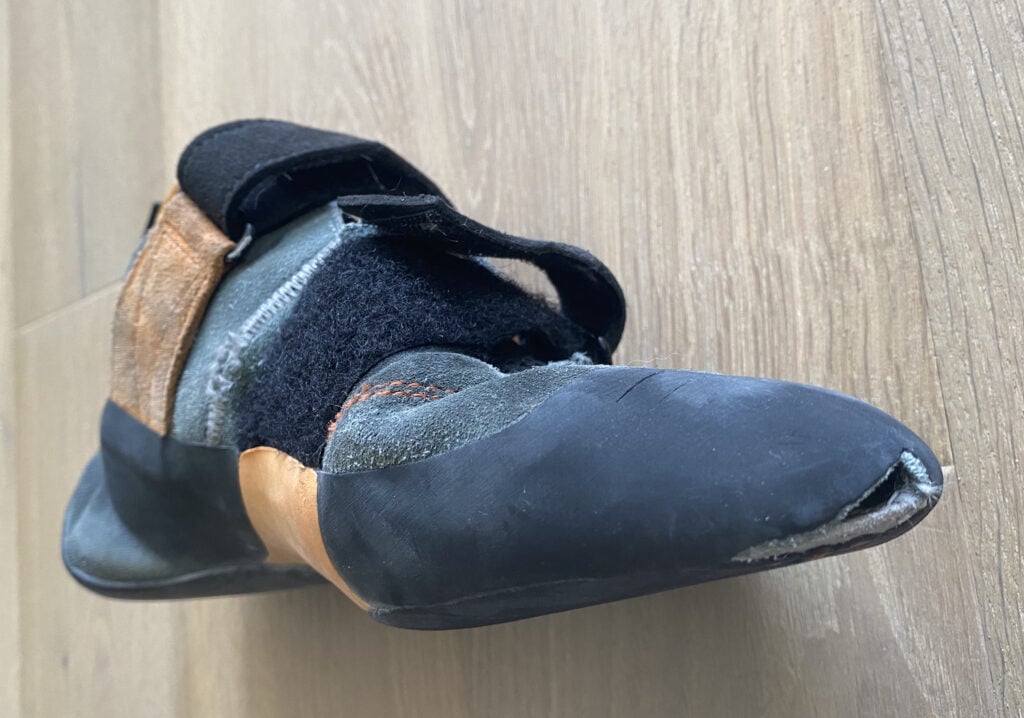
Common signs you need new shoes
Look for clear, visible signs. Small issues can often be resoled. Other problems mean full replacement.
- Worn or holey rubber at the toe or heel. When the rubber is thin, grip is lost.
- A sole that flexes where it should be stiff. Too-soft soles make edging hard.
- Upper material split, delaminated, or badly stretched. The shoe will no longer hold your foot.
- Loose rand or exposed midsole. These failures affect fit and safety.
- Persistent foot pain from stretched fit. If the shoe no longer supports your foot, performance drops.
How thin is too thin for climbing shoe rubber?
If you can see fabric or midsole through the rubber, replace the shoe. Thin rubber reduces friction and wears fast on rock. Replacing before holes start keeps edges intact and safe.
Can worn rubber be fixed with a resole?
Sometimes. If the upper and rand are intact, resoling restores grip. If the upper is damaged or the shoe has been resoled many times, replacement is better. Resoling works when the structure still fits you well.

Resole versus replace: how to decide when to replace climbing shoes
Resoling saves money and keeps a favorite shoe alive. Replacement gives you new fit and new technology. Decide by checking structure, fit, and cost.
- Check the upper. If it is torn, delaminated, or badly stretched, replacing is often the only option.
- Check the rand and midsole. If the rand detaches or the midsole is crushed, resoles may fail quickly.
- Count past resoles. Many resolers can handle up to a few resoles. If the shoe has had many resoles, replacement may be more cost-effective.
- Consider performance needs. For high-level edging or steep problems, new shoe technology or better fit may matter more than a resole.
From my experience, most climbers resole shoes when rubber is worn but the upper is solid. If a shoe has been resoled twice and the upper shows heavy wear, I recommend replacement to regain precise fit and heel shape.

How often to replace climbing shoes: timelines by use
There is no single answer for when to replace climbing shoes. Use level, climbing type, and shoe model matter. Below are rough timelines to guide decisions.
- Casual gym climbers who climb weekly: expect replacement every 1 to 2 years.
- Frequent gym or bouldering climbers: expect replacement every 6 to 12 months.
- Outdoor sport climbers with mixed use: expect replacement each season or every 6–18 months based on mileage.
- High-performance climbers pushing hard grades: replace or resole every few months.
Track shoe hours for clarity. I log hours for each shoe. When grip feels dull or edges flatten, I inspect for wear and decide on resole or replace. This practice helps me plan budgets and avoid mid-crux failures.

Factors that shorten climbing shoe life
Many small habits make shoes wear faster. Fixing these extends life and performance.
- Overuse on abrasive rock or concrete. Rough surfaces chew rubber.
- Poor fit leading to excessive flex. A wrong fit overstresses materials.
- Storing wet or compressed shoes. Mold and permanent stretch can result.
- Using shoes for non-climbing tasks. Walking in shoes wears rubber quickly.
- Low-quality or very soft rubber compounds. Softer rubber sacrifices lifespan for grip.
I once used one pair exclusively for approach hikes and gym sessions. The rubber wore out in months. After that, I keep a dedicated pair for walking and a separate climbing-only pair. It saved money and improved performance.

How to inspect shoes step-by-step before replacing
Use a quick checklist. A short inspection gives a clear answer.
- Look at the rubber thickness on toe and heel. Press to feel any soft spots.
- Flex the sole. Check for midsole crush where the shoe should be stiff.
- Inspect the upper for splits, delamination, or stretched welt.
- Check the rand glue lines and seams. Any separation matters.
- Try them on. Walk, edge on a small ledge, and verify fit and comfort.
If two or more items fail, you likely need a replacement. If only the rubber is thin, a resole is often best.

Tips to extend shoe life and get more value
Small habits add months of life to shoes. Use these practical tips.
- Rotate shoes. Use one pair for training and another for projects.
- Avoid walking on abrasive surfaces. Slip into approach shoes for trails.
- Clean shoes gently. Use a soft brush and mild soap when needed.
- Dry shoes naturally. Stuff with paper and air dry; avoid heaters.
- Store shoes flat and avoid compression. Keep shape intact.
I routinely rotate three pairs. One pair is soft and sticky for problems. Another is stiff for edging. The third is for approaches and warmups. This method keeps each pair longer and improves climbing.

Choosing the right replacement shoe
When you replace a shoe, pick one that matches how you climb. Fit and rubber compound matter most.
- Decide on purpose. Choose soft sticky shoes for steep climbs and stiff shoes for edges.
- Try fit for the climb. For long routes, aim for comfort. For bouldering, a tighter, aggressive fit may work.
- Choose durable rubber if you climb abrasive rock. Softer rubber grips better but wears faster.
- Consider resolability. Shoes with strong rands and solid uppers resole better and last longer.
I recommend trying shoes in-store with climbing movements, or buying from a shop with a good return policy. You gain confidence that the new shoe will replace the old one well.
Frequently Asked Questions of when to replace climbing shoes
How do I know when to replace climbing shoes versus resole them?
If only the rubber is thin and the upper is intact, resole. Replace when the upper, rand, or midsole fail or when fit is permanently changed.
Is torn fabric a reason to replace climbing shoes?
Yes. Torn or delaminated fabric affects structure and fit. Small cosmetic tears may be workable, but structural damage calls for replacement.
How long does a resole usually extend shoe life?
A good resole can add months to years, depending on use. Heavy boulderers may get several months, while casual climbers can get years.
Can worn shoes affect my climbing performance?
Absolutely. Worn rubber and stretched uppers reduce edging and heel hooking ability. Replacing worn shoes restores precision and confidence.
Are there safety risks when you wait too long to replace shoes?
Yes. Slips and poor foot placement are more likely with worn shoes. Replace shoes before critical climbs if grip or fit is compromised.
Conclusion
Recognizing when to replace climbing shoes keeps your feet safe and your climbing sharp. Watch for worn rubber, damaged uppers, and loss of fit. Use rotation, careful care, and timely resoles to stretch value. If multiple structural issues appear, replace the shoe to restore performance and confidence.
Take action today: inspect your shoes, plan resoles, and choose a replacement that fits your climbing goals. Share your experiences or questions below, and consider subscribing for more gear tips and field-tested advice.


