

7 Best Shoes to Lift Weight in That Support Strong, Controlled Reps
A steady base helps you brace, push, and pull with confidence during strength workouts. Running shoes often have soft, cushioned soles that compress under heavy loads, while training barefoot may feel uncomfortable and offer little grip on a gym floor.
That’s where weightlifting shoes can help. Their firm, flat or slightly raised heels give your feet a stable platform, so you can press through your lifts without the extra softness of running shoes. Grippy soles also help your feet stay planted.
Many pairs use secure straps or laces to hold your foot in place, while breathable uppers keep workouts more comfortable. A raised heel can also help you reach a deeper squat position if your ankle mobility limits your stance.
Heel height, fit, materials, and flexibility vary between pairs, so consider your lifts and how you like your shoes to feel. Explore the best shoes to lift weight in below to find a pair that suits your training.
7 Best Shoes to Lift Weight in Reviews

1.adidas Powerlift 5 Weightlifting Shoes 15 mm
15 mm heel lift helps support a stable stance when lifting weights

2.M MANUEKLEAR Training Squat Shoes
Reinforced heel and 2 cm sole height difference aid stability
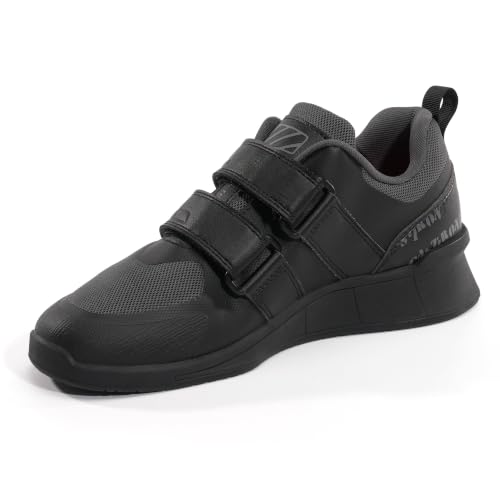
3.CASTIRON LIFT Lifting Shoes with 1.6" Heel
Wide toe box lets toes spread and grip the floor during squats

4.LIROMUX LIRO0419 Weight Lifting Shoes
1.4-inch heel improves posture and lifting depth while reducing strain

5.Osterland Weightlifting Shoes with Raised
1.3-inch raised heel supports a stable stance and improves posture

6.AIRHAS Barefoot Workout Shoes Zero Drop
Zero-drop soles keep feet in a natural posture to improve balance

7.relxfeet Barefoot Shoes with Wide Toe Box
Wide forefoot gives toes room to spread for comfort during lifting
1. adidas Powerlift 5 Weightlifting Shoes 15 mm
Adidas Powerlift 5 weightlifting shoes give lifters a raised heel and grippy base for lifting sessions. Their 15-millimeter heel lift changes the foot position, which can help you settle into your stance for lifts that call for a stable base.
The rubber outsole provides traction underfoot, helping keep your feet planted while you work with weights. For buyers choosing lifting shoes, that grip is a central feature to consider, especially when foot placement matters during a set.
A textile and synthetic upper combines breathability with a lightweight feel. The materials also offer durability, while keeping the shoe from relying on a heavy upper during training.
Adjustable laces and a wide hook-and-loop strap let you tighten the shoe in two ways. The laces adjust the fit across the foot, and the top strap adds a way to secure the upper around the foot.
The shoes use some recycled materials, which may appeal to shoppers who want that included in their footwear. The listed White/Black/Crystal Sky color option comes in a size marked 10 Women/9 Men.
These shoes suit lifters who want a 15-millimeter raised heel, outsole traction and an adjustable, snug fit. Their weightlifting-focused features make them a practical option to consider for gym sessions that involve lifting.
- 15mm heel lift supports a raised stance
- Rubber outsole grips the floor during lifts
- Laces and top strap secure the fit
- Lightweight upper helps during training
- No major cons
2. M MANUEKLEAR Training Squat Shoes
For squats, deadlifts and power cleans, these MANUEKLEAR weightlifting shoes focus on keeping your feet supported and planted. Their reinforced chassis and widened, raised heels help steady your stance during heavy lifts.
The heel sits two centimeters higher than the front of the sole. That difference changes the angle between your calves and the ground, while the reinforced heel support helps it hold its shape under heavy loads.
A high-abrasion rubber outsole uses honeycomb patterns to provide grip and support airflow. Its varied tread patterns help keep your feet planted during explosive movements and improve traction when moving straight ahead.
Laces and a hook-and-loop strap let you secure the fit across your foot. Inside, the lining breathes and wicks away sweat, while the Oxford cloth upper offers tear resistance.
The construction combines TPU, rubber and Oxford cloth. Seamless TPU helps resist moisture-related deformation, and the bright white color gives the shoes a simple look.
This size is listed as 12.5 for women and 11 for men, and the brand says the fit differs between men’s and women’s versions. Check the size chart before ordering; these shoes suit lifters who want raised heels and added support for strength training.
- Two-centimeter heel rise supports lifting stance
- Reinforced heel helps handle heavy loads
- Honeycomb outsole adds grip for explosive lifts
- Laces and strap secure the fit
- Check the size chart; fits differ by gender
3. CASTIRON LIFT Lifting Shoes with 1.6″ Heel
The 1.6-inch raised heel gives these CASTIRON LIFT shoes a pronounced lift for squats, cleans and snatches. That extra heel height helps lifters who need more ankle movement to keep their torso upright as they lower into deep positions.
A wide toe box gives your toes room to spread and grip the floor during squats and deadlifts. This can suit lifters who find standard lifting shoes too narrow, while the black-grey design keeps the look straightforward.
The full rubber outsole makes even contact with the floor and provides traction across the foot. Its one-piece construction avoids soft spots, giving your feet a firm base for heavy lifts and helping transfer force through the sole.
Breathable mesh forms the upper, and a TPU-coated toe cap covers the area that sees the most wear. The mesh supports airflow during training, while the reinforced toe adds protection without extra bulk.
Two hook-and-loop straps secure the shoes without laces. You can adjust them between sets without stopping to retie anything, and the paired straps help hold the fit evenly around your feet.
The listed size is 5.5, so check that it matches your needs before buying. These shoes suit lifters who want a high heel, a roomy toe area and a firm base for squat and powerlifting sessions.
- 1.6-inch heel supports deep squat positions
- Wide toe box lets toes spread and grip
- Full rubber sole gives firm floor contact
- Dual straps adjust quickly between sets
- No major cons
4. LIROMUX LIRO0419 Weight Lifting Shoes
Weightlifters who want extra heel support get a raised heel and a stable base with these LIROMUX shoes. The heel measures 1.4 inches in the description, which says it can help you squat deeper and improve your lifting posture.
A 1.7-centimeter height difference between the front and back of the sole adds support during lifts. The reinforced heel and arch support are intended to help keep your feet steady under weight.
The outsole uses a honeycomb pattern with several tread patterns for grip during weightlifting and other training. Its design also aims to improve breathability, which may matter during longer gym sessions.
A “power bridge” design adds support across the foot, while the listing says the shoes suit squats, deadlifts, CrossFit and weightlifting. That range makes them an option for people who use several types of strength training.
The listed size is women’s 7.5 or men’s 6, and the specified color is Black a. The title calls out a 1.6-inch heel, though the description gives a 1.4-inch heel, so check the heel measurement before buying.
– Raised heel supports squat posture and depth
– Reinforced heel helps steady feet under load
– Honeycomb outsole pattern adds grip for lifts
– Arch support and power bridge help brace feet
Cons
– Heel height differs between title and description
– Only one size and color are listed
5. Osterland Weightlifting Shoes with Raised
At the gym, the Osterland weightlifting shoes are made for squats, deadlifts and other strength training. Their raised heel measures 1.3 inches in the item details, while the title lists 1.4 inches, so check which measurement applies to your size.
The raised sole at the front and back is designed to support a steady lifting position. A rubber outsole with anti-slip grooves adds grip on the floor, which can help during weight exercises.
Double-layer nylon hook-and-loop straps wrap over the foot and fasten quickly. The one-piece design helps hold the foot in place, giving lifters a secure fit without tying laces between sets.
The upper combines microfiber and fabric, which the listing says lets sweat evaporate to help feet stay dry. This breathable construction may matter during demanding sessions, though the data does not give a ventilation rating or material breakdown.
These shoes are listed for weightlifting, squats, CrossFit and deadlifts. They come in black and red, with the listed size being 11.5 Wide for women and 10 for men.
Osterland’s raised heel and grippy sole make this pair most relevant to people who want dedicated shoes for lifting. The stated size is specific, so buyers should confirm it suits them before choosing this option.
- Raised heel helps support a stable lifting posture
- Grooved rubber outsole helps grip the floor securely
- Double Velcro straps help secure the foot during lifts
- Breathable upper helps feet stay dry during workouts
- Designed for squats, deadlifts, and weightlifting
- No major cons
6. AIRHAS Barefoot Workout Shoes Zero Drop
Zero-drop soles give these AIRHAS workout shoes a flat base for weight training, keeping the heel and forefoot at the same level. That setup supports a natural foot position, while the thin sole lets you feel the ground during lifts and other floor exercises.
The flexible rubber outsole has a textured tread for traction, which helps when you move between lifting and cross-training drills. Its flexible build also suits yoga and jogging, so the shoes can cover more than gym sessions.
A stretchy knit upper allows airflow and flexes around the foot. The padded heel adds cushioning at the back, and the lighter build can make them easier to wear through a workout or for daily activities.
You can wear them with the insole in place or remove it for a more barefoot feel. A layer between the midsole and insole keeps that choice available without changing the shoe’s basic fit.
The product title lists the White/Gum color and size 7.5. At about 0.9 pounds, the pair is light, and the listed design can also be worn without socks for gym sessions, yoga, jogging or everyday use.
For lifting, the flat sole and ground feel are the main draws, while the knit upper and flexible tread add comfort and movement for other activities. These shoes suit lifters who prefer a barefoot-style feel and want one lightweight pair for training and casual wear.
- Zero-drop sole keeps the foot level for lifting
- Thin, flexible sole helps you feel the ground
- Textured rubber tread adds traction for workouts
- Removable insole offers a barefoot-style option
- Thin soles provide less cushioning underfoot
7. relxfeet Barefoot Shoes with Wide Toe Box
relxfeet makes barefoot-style shoes for weight training, with a level sole and a roomy forefoot. The zero-drop platform keeps the heel and forefoot at the same height, giving lifters a close-to-the-floor feel without a raised heel.
The wide toe box leaves room for your toes to spread during lifts and everyday movement. A flexible rubber outsole bends with your foot while providing a protective layer and traction on gym floors and common indoor or outdoor surfaces.
The breathable knit upper flexes as you move, and side panels with laces help hold the midfoot. A lightly cushioned insole adds comfort for gym sessions, walking and daily wear.
Each shoe weighs about 0.55 pounds in men’s size 7.5, though weight changes by size; the listed size 10.5 Wide weighs about 0.44 pounds. The Army Green pair also suits cross training, treadmill workouts, short runs, travel and casual use.
For lifters who want a wide toe box and a low-profile feel, these shoes offer a simple option for gym work and everyday movement. They suit buyers who value flexibility and foot room over a raised-heel design.
- Zero-drop sole gives a close-to-floor lifting feel
- Wide toe box lets toes spread during lifts
- Flexible rubber sole adds everyday traction
- Breathable knit upper flexes with your foot
- Light cushioning may feel minimal for long walks
How to Choose the Best Shoes to Lift Weight in
The right lifting shoe can improve your footing and make certain movements feel more natural, but heel height, fit, sole flexibility, training style, and price all affect which design suits your workouts.
| If You Need | Look For | Expect |
|---|---|---|
| More upright squat position | Raised, firm heel | Less natural feel for deadlifts |
| Stable heavy lifts | Flat, rigid sole | Less flexibility for cardio |
| Room for wider toes | Broad toe box | More space around the forefoot |
| One shoe for mixed training | Moderate sole flexibility | Less lift-specific support |
| Lightweight gym footwear | Thin, flexible materials | Less cushioning under heavy loads |
| Secure foot hold | Adjustable laces and straps | More time to tighten |
Heel Height
A raised heel changes your ankle angle, which often helps you reach a deeper squat with a more upright torso. It suits lifters whose ankles feel tight or whose heels rise during squats.
Heel heights around 0.5 to 0.75 inches are common in lifting shoes, while higher options create a stronger forward shift. More lift is not automatically better; choose a height that keeps your balance comfortable.
A raised heel helps most in squats and some Olympic lifts, but it can feel awkward during deadlifts, where many lifters prefer a low, level stance. If you train both, consider separate shoes or a versatile flat pair.
Product listings sometimes give conflicting heel figures or mix heel height with heel-to-toe drop, the difference between the heel and forefoot. Look for consistent measurements and confirm the shoe’s actual profile before ordering.
Sole Stability
A firm, broad sole gives your feet a steady base when you push into the floor, which is useful for squats, presses, and heavy pulls. Soft running-shoe cushioning can compress and make balance feel less predictable.
Look for a low-compression sole and a wide base under the heel and forefoot. A rubber outsole with a defined tread helps grip gym flooring, while a very soft or curved sole is less suited to heavy lifting.
Sole firmness involves a comfort trade-off: rigid shoes feel stable under load but less forgiving while walking. If your sessions include long warm-ups or time on your feet, try the shoe indoors before committing.
Fit And Toe Room
A secure fit keeps your foot from sliding inside the shoe as you brace and drive through a lift. Your heel should feel held, while your toes should have enough room to spread without hitting the front.
Measure both feet late in the day, then compare the larger foot with the maker’s size chart. Sizing labels vary, and some listings show men’s and women’s conversions that are easy to misread.
A wide toe box helps lifters with broad feet or toes that splay under pressure, but extra width can leave a narrow foot feeling loose. Choose the shape that matches your foot, not just the size number.
Closure And Hold
Laces let you adjust tightness across different parts of the foot, while a strap adds pressure over the midfoot. Together, they can keep the shoe secure during heavy sets without relying on a tight toe box.
A single strap is simpler to fasten, while two straps allow separate adjustment across the foot. Lace-free designs save time, but they offer fewer ways to fine-tune pressure if your foot shape needs a specific fit.
Check that straps sit comfortably and do not dig into the top of your foot when you bend your ankle. If you prefer quick changes between exercises, simple closures may suit you better than a more involved setup.
Training Style
Dedicated lifting shoes suit sessions centered on squats, cleans, or other lifts that benefit from a raised heel and a firm base. Their stiff construction is less comfortable for running, jumping, and extended cardio.
For deadlifts, many lifters prefer a flat, thin sole that keeps them close to the floor. A raised heel changes your starting position, so choose based on your main lifts rather than a broad list of advertised uses.
If your workouts mix lifting with walking, circuits, or short cardio intervals, a flexible cross-training shoe offers more versatility. It will usually give up some of the rigid support and raised-heel position of a specialized lifting shoe.
Sole Flexibility And Drop
Zero-drop shoes place the heel and forefoot at the same level, while a raised heel angles the foot forward. Flat footwear suits lifters who prefer a natural stance, but it does not provide extra ankle angle for squatting.
Thin, flexible soles let your foot move more freely and feel close to the floor. That feel appeals to some experienced lifters, though it offers less structure than a rigid platform and may feel unfamiliar at first.
A transition from cushioned trainers to minimalist shoes takes time because your feet and lower legs work differently. Start with lighter loads and shorter sessions, then increase use only if the new stance remains comfortable.
Upper Materials And Durability
The upper holds your foot in place and affects ventilation, flexibility, and wear. Mesh and knit materials feel lighter and breathe well, while denser synthetic panels often provide a firmer, more supportive feel.
Look at reinforced areas around the toe and sides if you train frequently or drag your feet during setup. A protective toe cap can resist scuffs, while lightweight fabric may feel cooler but show wear sooner.
Construction details such as stitched seams, bonded panels, and strap attachment points influence how well a shoe handles repeated tightening. For several weekly sessions, prioritize secure joins and materials that feel stable rather than choosing by appearance alone.
Price And Value
Lower-priced shoes can cover basic gym use, especially if you lift casually and do not need a specific heel profile. Still, confirm sizing, construction details, and return terms so a low price does not lead to a poor fit.
Spending more is worthwhile when you need a precise heel height, a consistently firm sole, or durable materials for frequent training. A higher cost does not guarantee a better match, so weigh the features against your routine.
If you train several times a week, compare the expected lifespan and fit support with the upfront cost. For occasional lifting, a simpler shoe may be enough, provided its sole and shape suit your main exercises.
Return Policy And Sizing
Online shoe sizing can be uncertain because charts and conversions differ, and listed sizes may not describe the same fit. Review the seller’s return window and keep the shoe clean indoors until you know it feels right.
Try both shoes with the socks you usually lift in, then test a squat stance and a few bodyweight hinges. Your heel should stay planted, and your toes should not feel squeezed or slide forward.
A clear exchange policy helps if one size is too short or the width feels wrong. Keep packaging and tags until the fit is settled, and verify whether return shipping costs reduce the value of an exchange.
Frequently Asked Questions
Should I choose raised-heel shoes or zero-drop shoes for weightlifting?
Raised heels can support an upright posture and lifting depth, as with the adidas Powerlift 5 or LIROMUX LIRO0419. The AIRHAS Barefoot Workout Shoes have zero-drop soles for a more natural foot position and balance.
What should I look for in the materials and build of lifting shoes?
Look for a stable design that suits your stance and gives your feet the space they need. The CASTIRON LIFT and relxfeet shoes have wide toe boxes, while the M MANUEKLEAR has a reinforced heel.
Which should I pick: CASTIRON LIFT or relxfeet?
Both offer a wide forefoot for toe spread. CASTIRON LIFT has a 1.6-inch heel, while relxfeet is a barefoot-style option with a wide toe box; choose based on whether you prefer a raised heel or a natural foot position.
Are any of these shoes suitable for squats?
The M MANUEKLEAR’s reinforced heel and 2 cm sole height difference are designed to aid stability, while the CASTIRON LIFT’s wide toe box lets toes spread and grip the floor.
How can I choose between the different raised-heel shoes?
Compare the heel height and the support features: the adidas Powerlift 5 has a 15 mm heel lift, while the LIROMUX has a 1.4-inch heel and the Osterland has a 1.3-inch raised heel.
What comes in the box with these shoes?
The product details provided do not specify what is included in each box, so check the individual listing for package contents before ordering.
So, What Should You Buy?
For most lifters, the adidas Powerlift 5 is the best pick, with its 15 mm heel lift supporting a stable stance. On a budget, consider the M MANUEKLEAR Training Squat Shoes, whose reinforced heel and 2 cm sole height difference aid stability.
Want more toe room? Choose CASTIRON LIFT; for a raised heel that supports posture and lifting depth, consider LIROMUX. The Osterland offers another stable raised-heel option, while AIRHAS suits zero-drop fans and relxfeet gives toes room to spread. Choose the model that fits your needs and lift with confidence.


